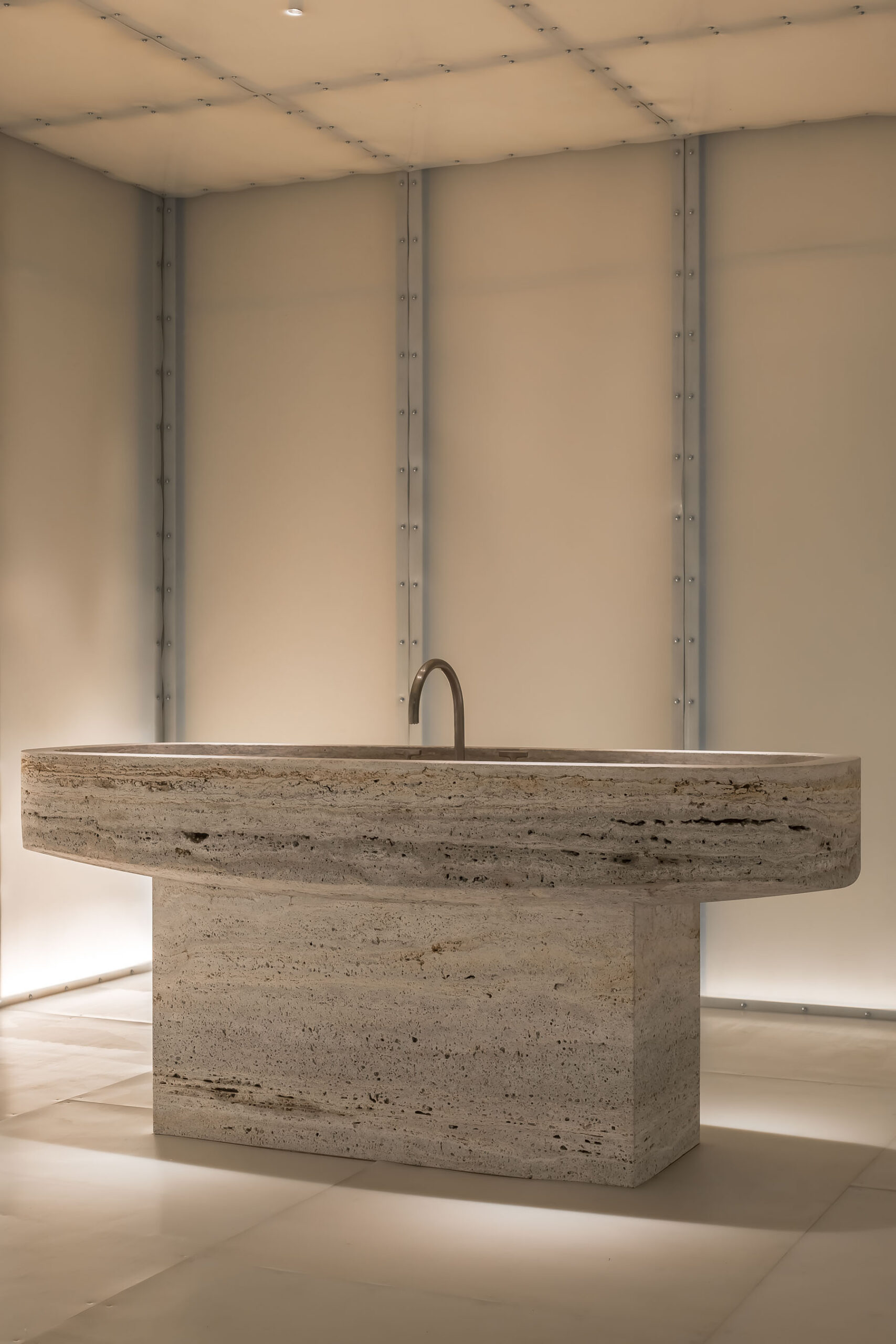
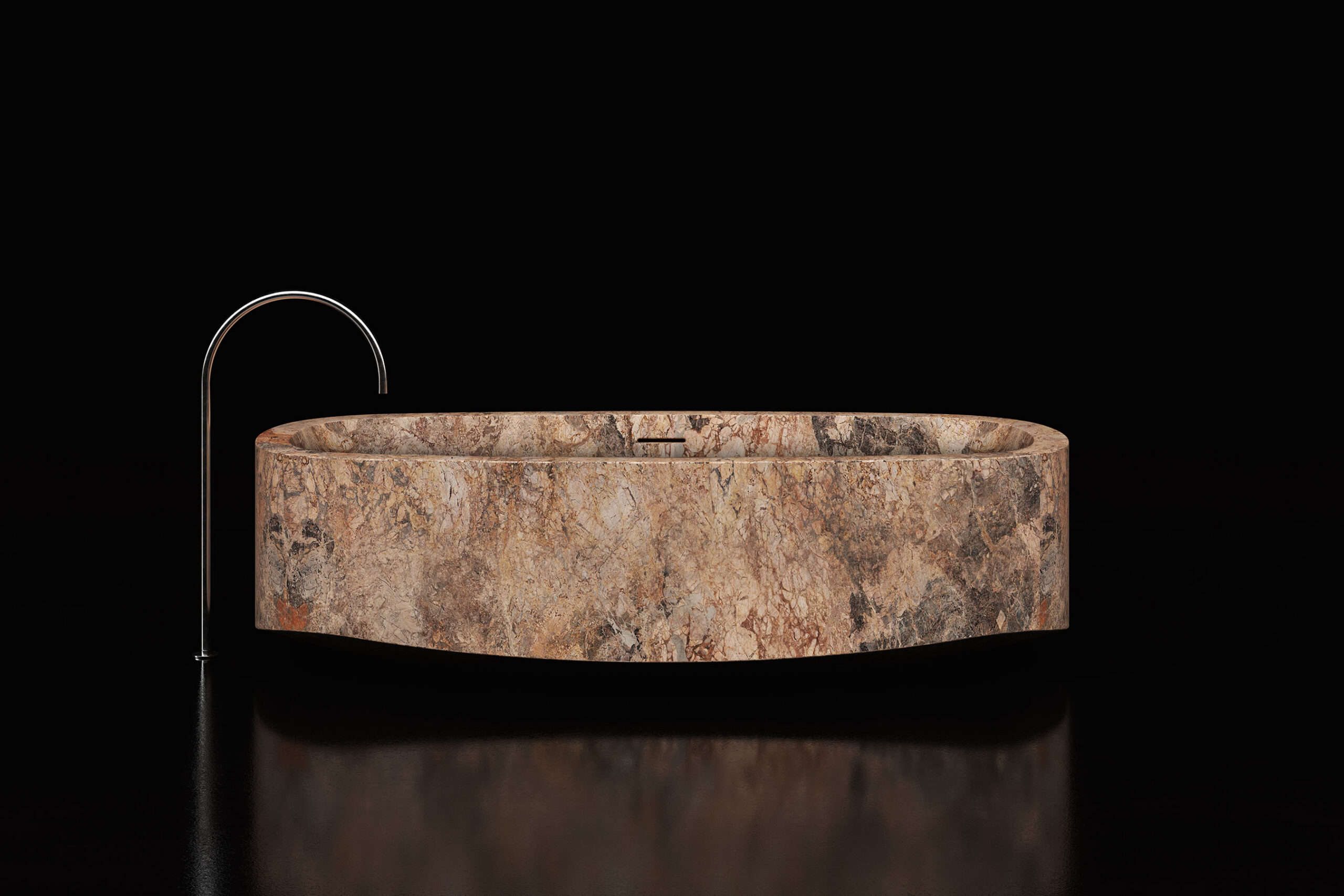
The coast is shaped by slow, constant movement. Wind reshapes the dunes, water wears down rock, and the forms that remain carry the trace of that motion. The hull of a ship belongs to the same landscape: a form made to move through water with ease, and to carry and protect what it holds.
First imagined for the daily rituals of water, Ark finds its origin in this maritime landscape. It appears to have emerged organically from the stone, as a subtle translation of the sea. One long, flowing curve cuts through the solid form, recalling the line of a hull gliding through water. It is an abstraction of movement, held in a form that stands still.
The material carries the same landscape within it, recalling the dunes and the interplay of wind and sand. Its natural character contrasts with the clear geometry of the design, creating a rhythm between what nature provides and the architectural purity of the form.
Time plays an essential role. The stone itself was formed over centuries, and the craftsmanship behind each curve and line carries that slow process further. The result holds a delicate tension between strength and elegance, as if shaped by nature and refined by hand.
The soft lines lend the design a sense of shelter and calm. In keeping with its name, Ark is a vessel: a form that holds and protects, and brings a moment of rest to everyday life.