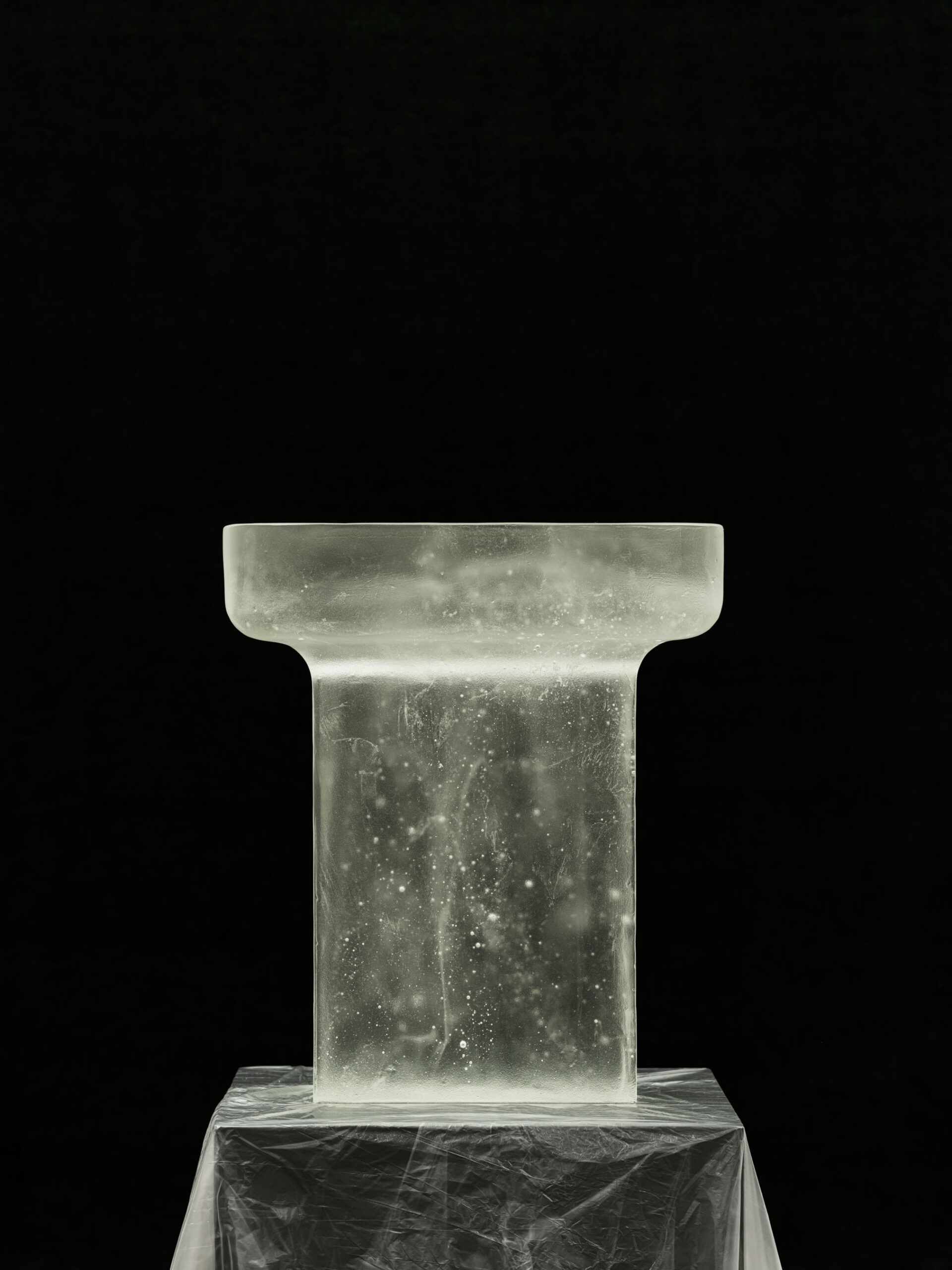
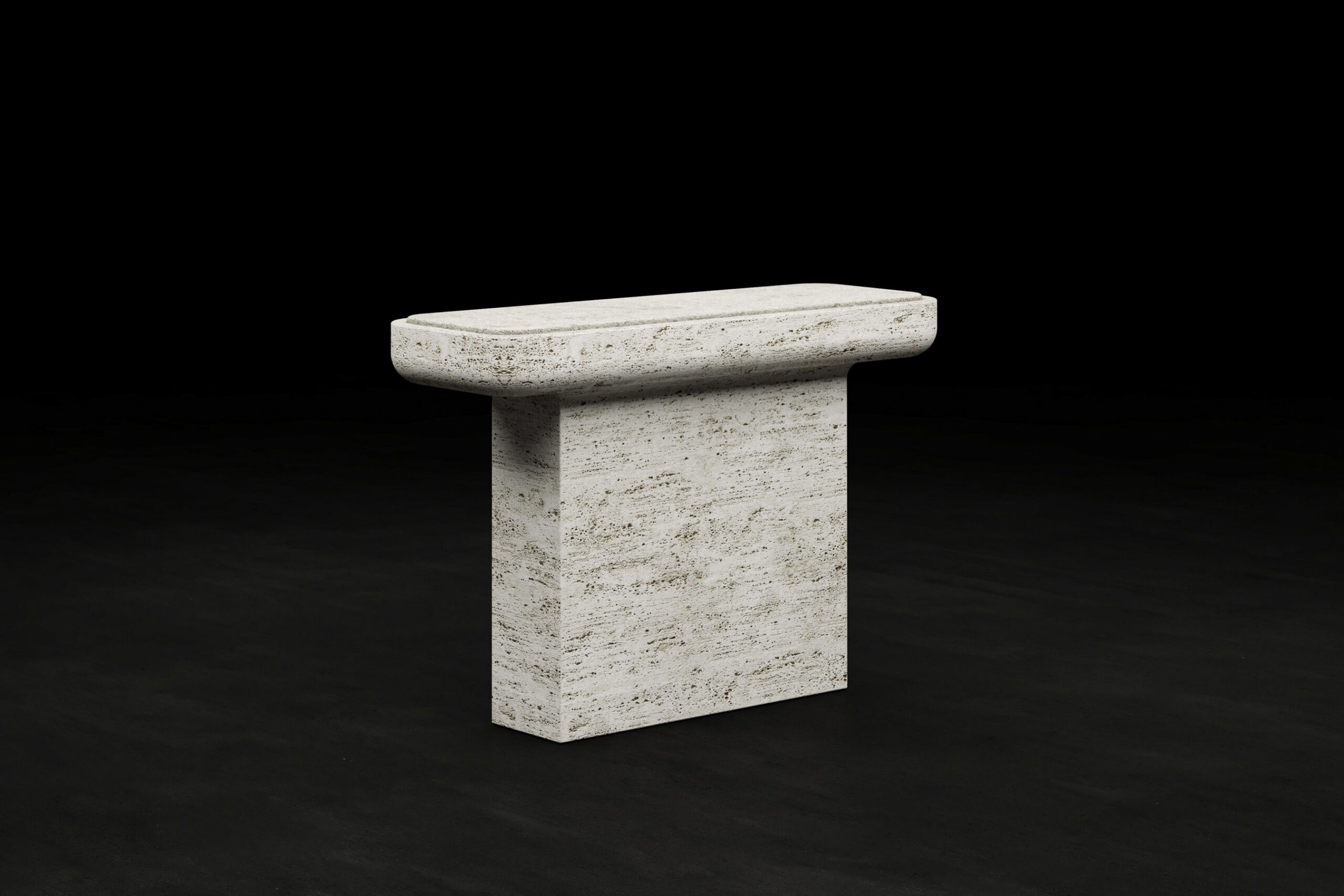
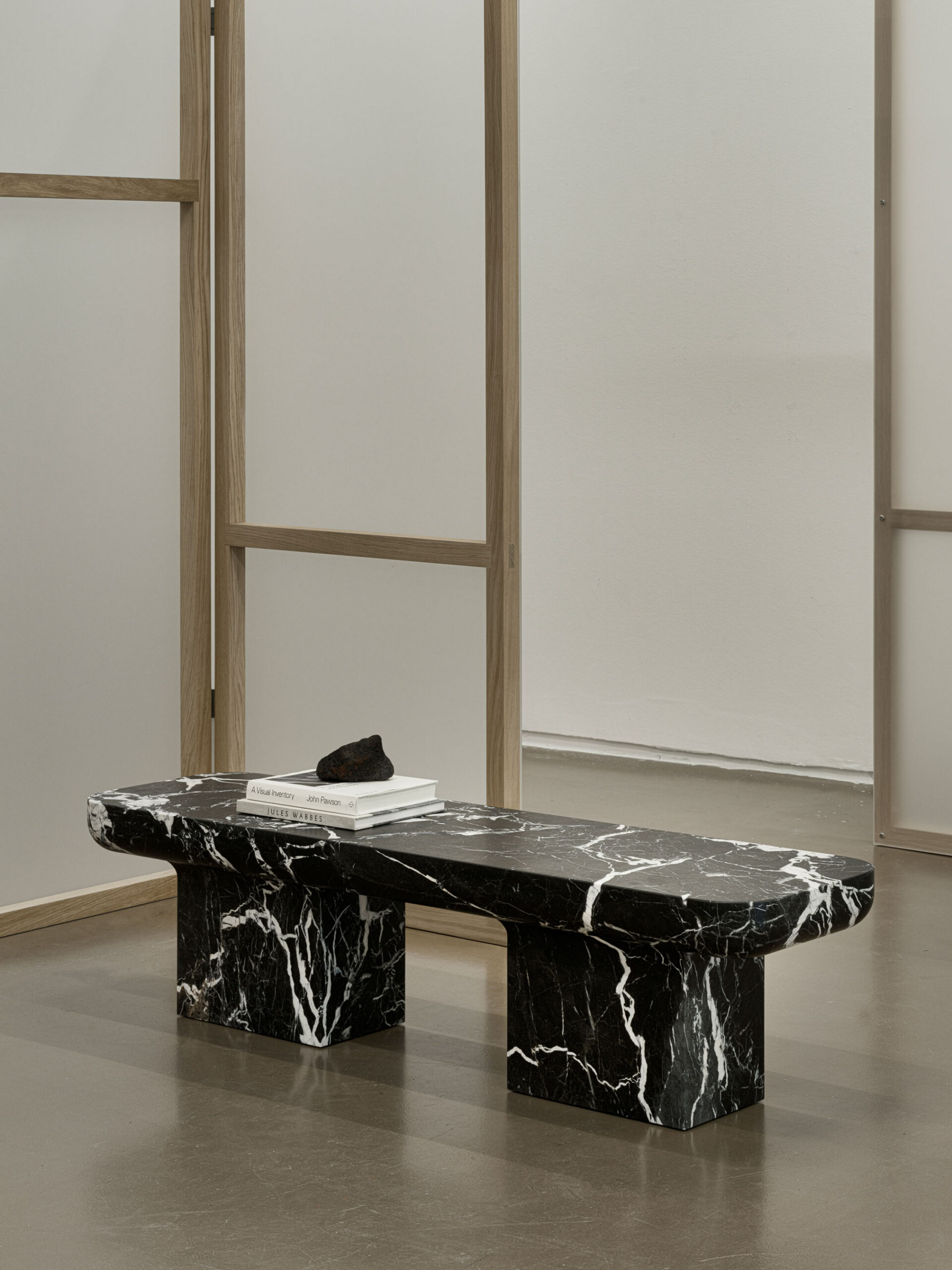
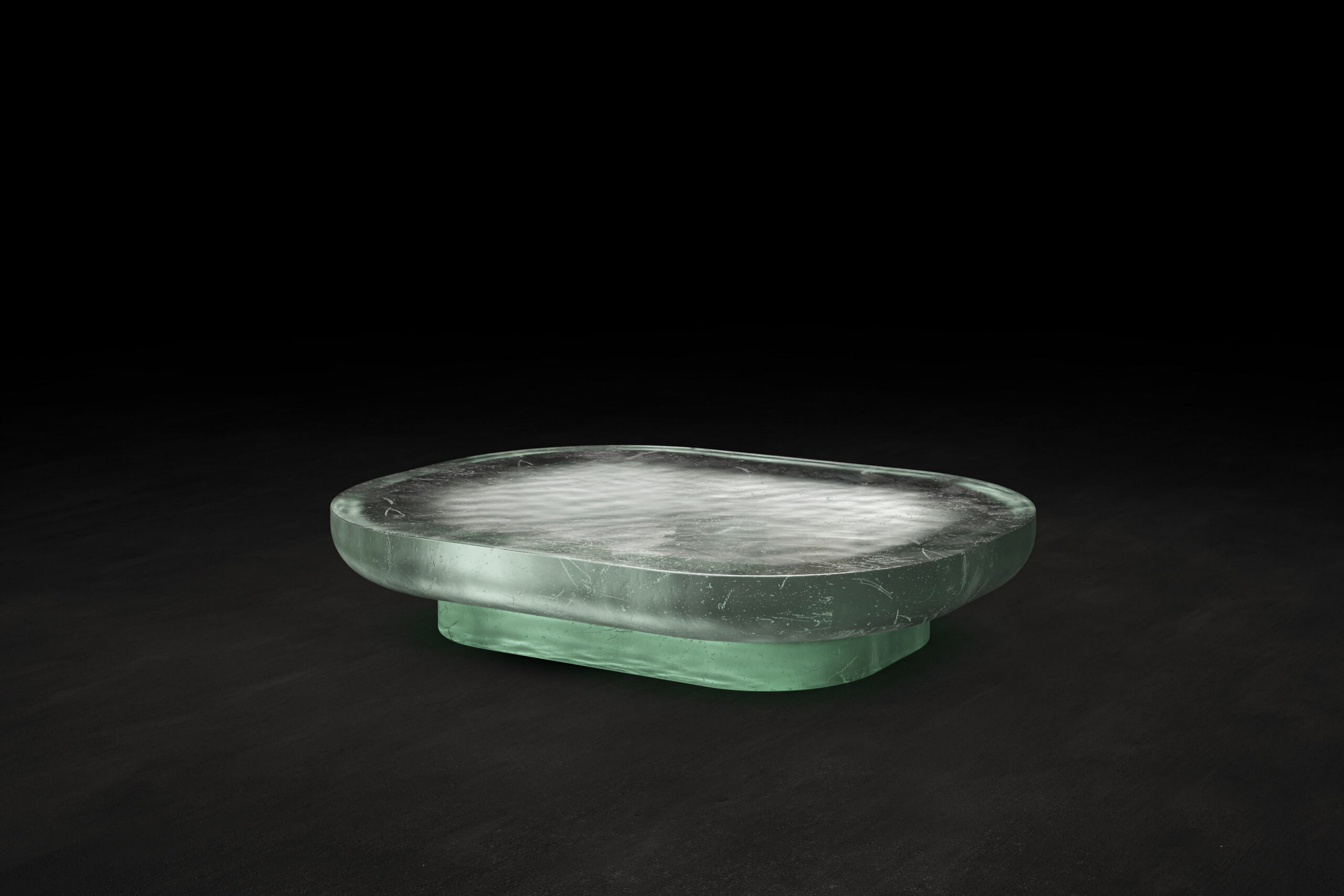
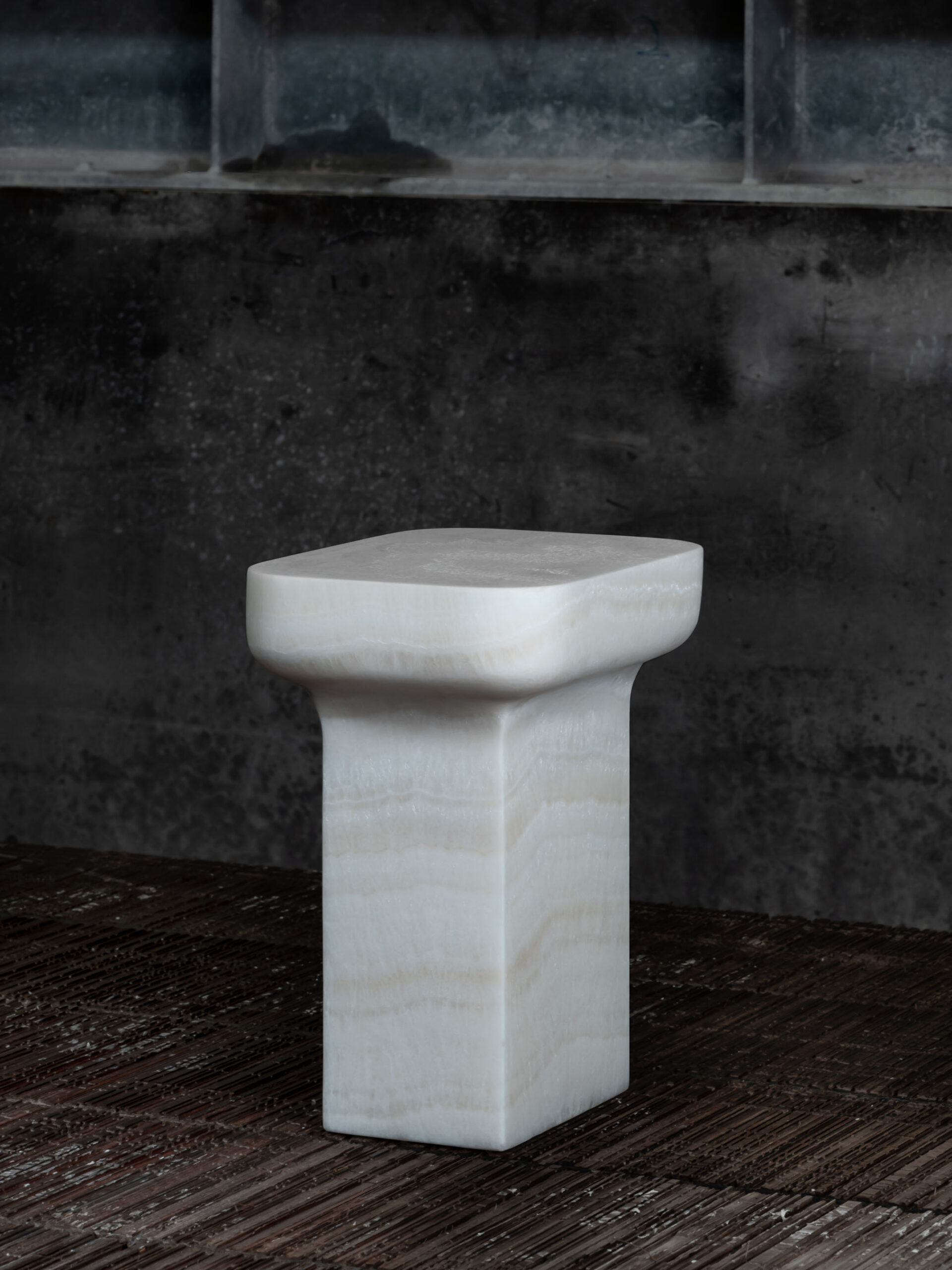
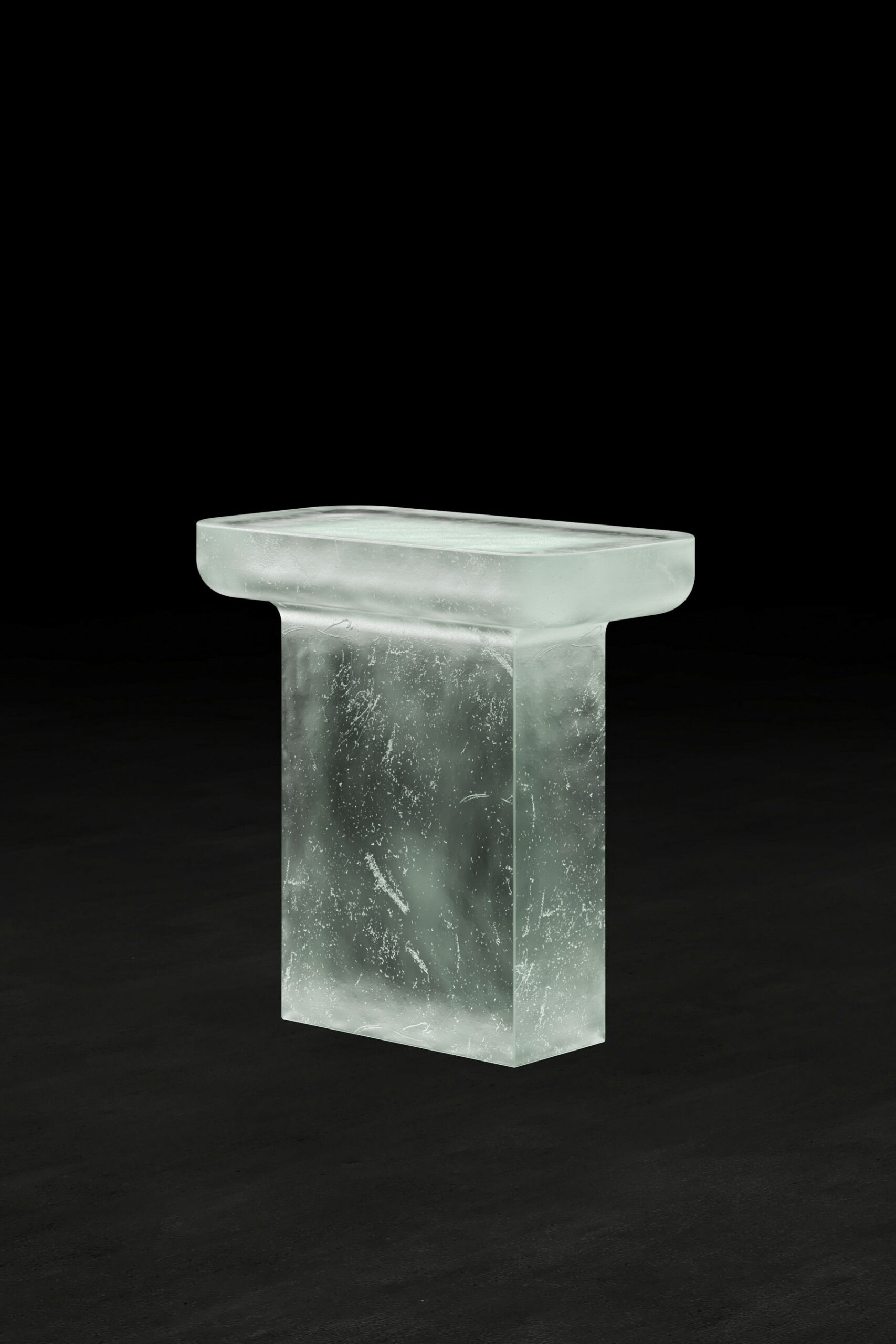
Some forms seem to have existed long before anyone drew them. A support that rises, a surface that rests upon it: the oldest gesture of building, carried through the architecture of antiquity and still understood without explanation. It belongs less to a period than to memory, a sense of order that lives somewhere between line and proportion, between what holds and what is held.
From that memory, form is reduced to its essence. Little is added, and little is needed. A straight line meets a softer one, and where they meet the material seems to yield, as if something of the ancient capital had settled into it. Strictness and softness stay in balance, neither giving way to the other, and it is that balance which holds the whole together.
Symmetry and proportion are less rules here than a kind of calm. Each form stands upright and centered on its own axis, the way a column does. Everything that could be taken away has been, until what is left feels inevitable, as though it could not have been otherwise.
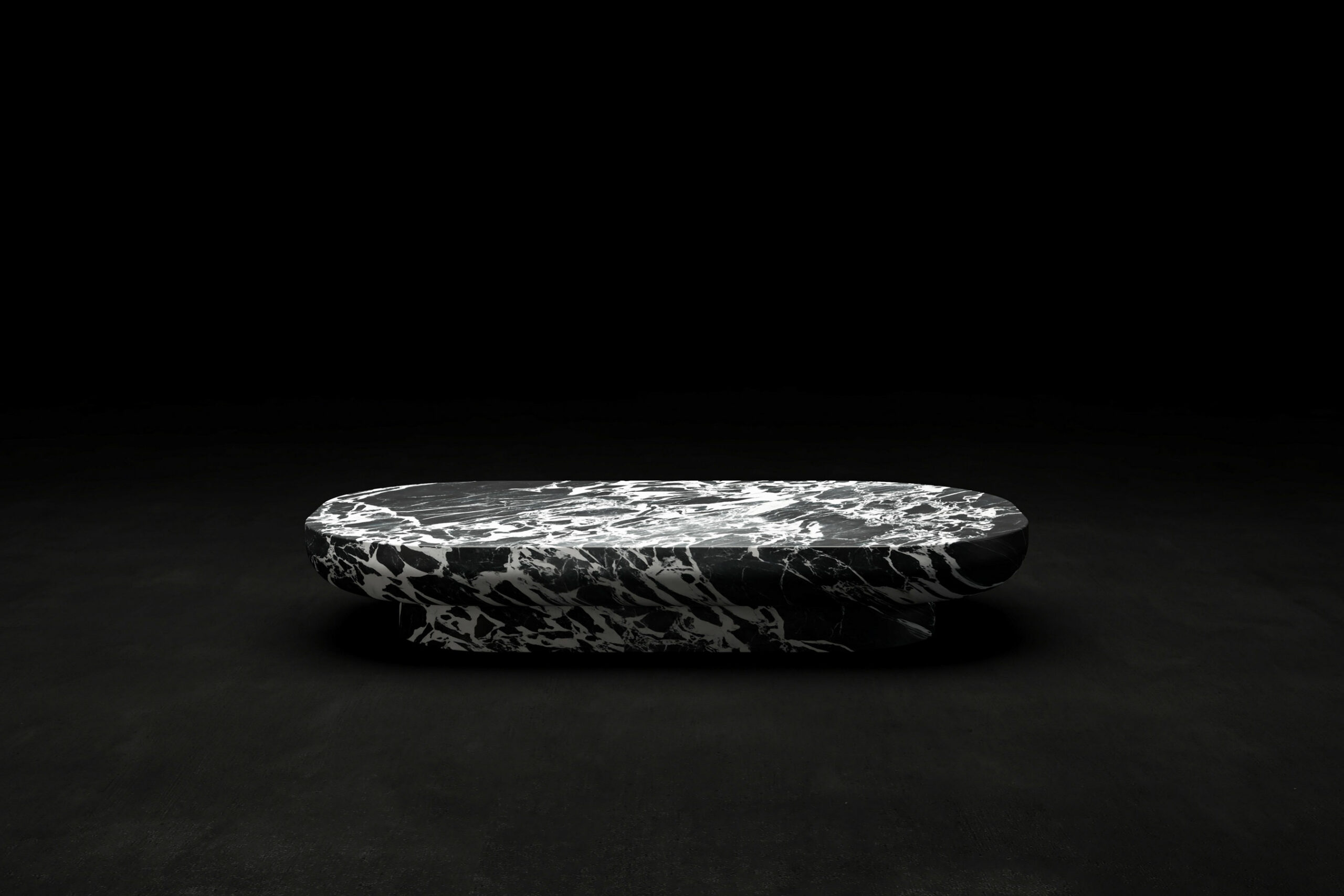
In stone, every form is carved from a solid block. What ornament there is was never designed: it was formed by nature, slowly, in layers and veins laid down long before the stone was ever cut. No two blocks carry the same drawing or the same expression. The form gives the stone a frame; the stone gives the form its soul.
In glass, every form is cast as a single mass by master artisans in the Czech Republic. Here too, ornament arose in the making, as the glass slowly cooled, leaving soft undulations, suspended air and fine inner striations. As light passes through, the form shifts with the hour. The form gives the glass a frame; the glass gives the form its soul.
Mono holds both in a single language: the clarity of an archetype and the unrepeatable life of its material. What remains is elementary.