Between two things that belong together, there is always a small distance. A line where one surface ends and the next begins, narrow enough to overlook, wide enough to let the light through. In Japanese design, that interval was never treated as empty. It has a name, ma, and it was given as much care as the forms around it. Temple builders joined timber without nails, cutting each piece so that it locked into the next, and divided their structures into balanced elements that met and held each other. The space between them was where a structure was given room to breathe.
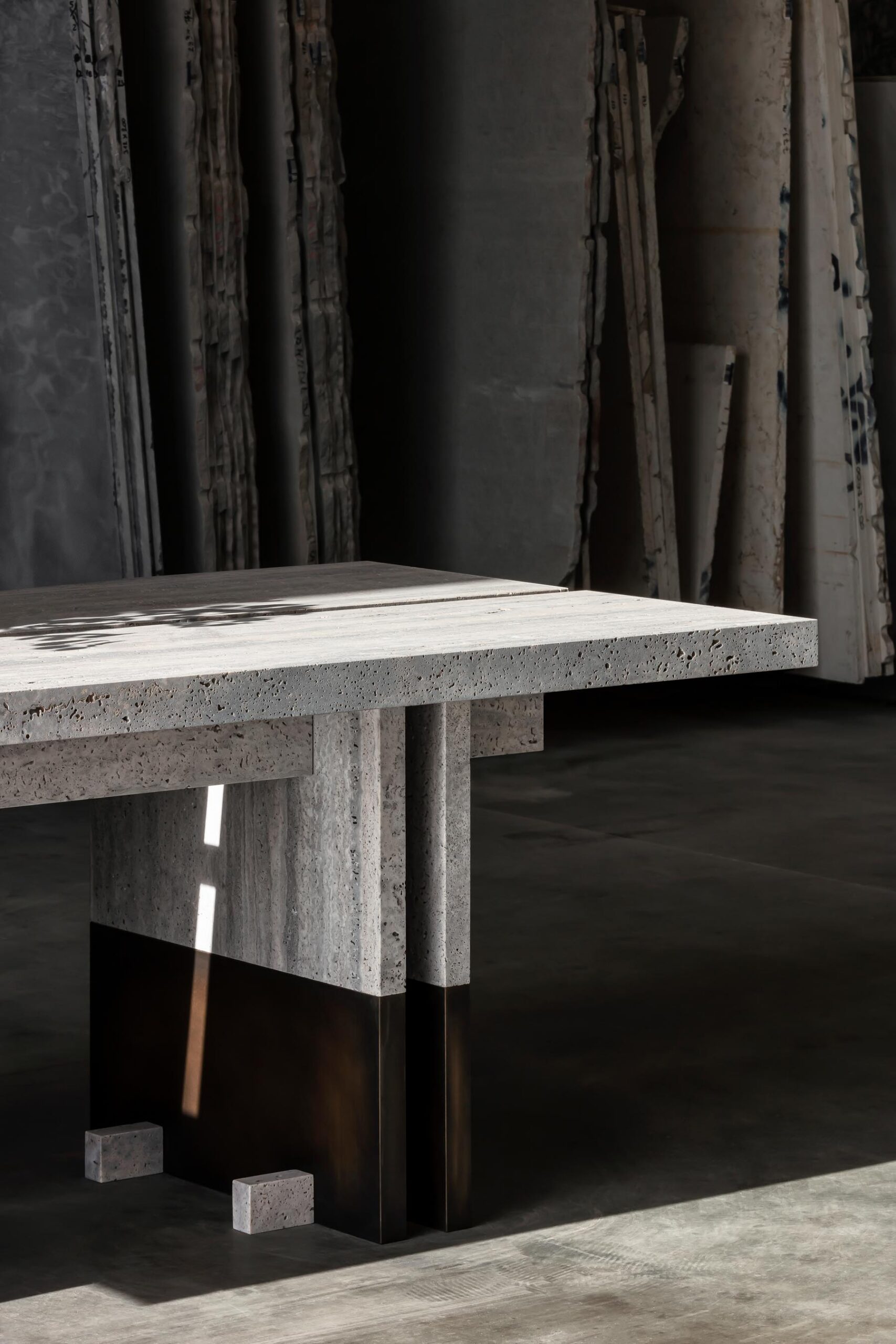
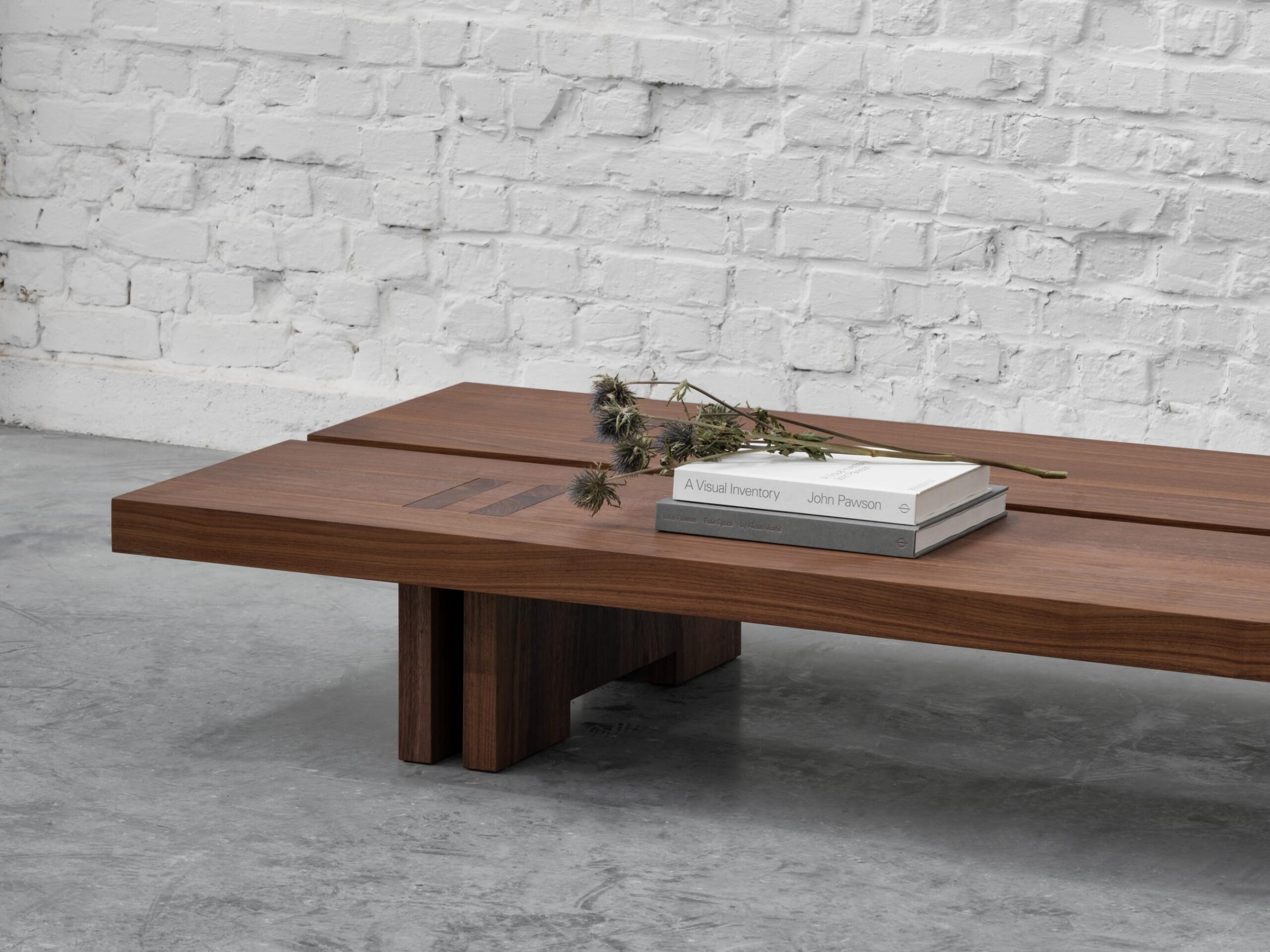
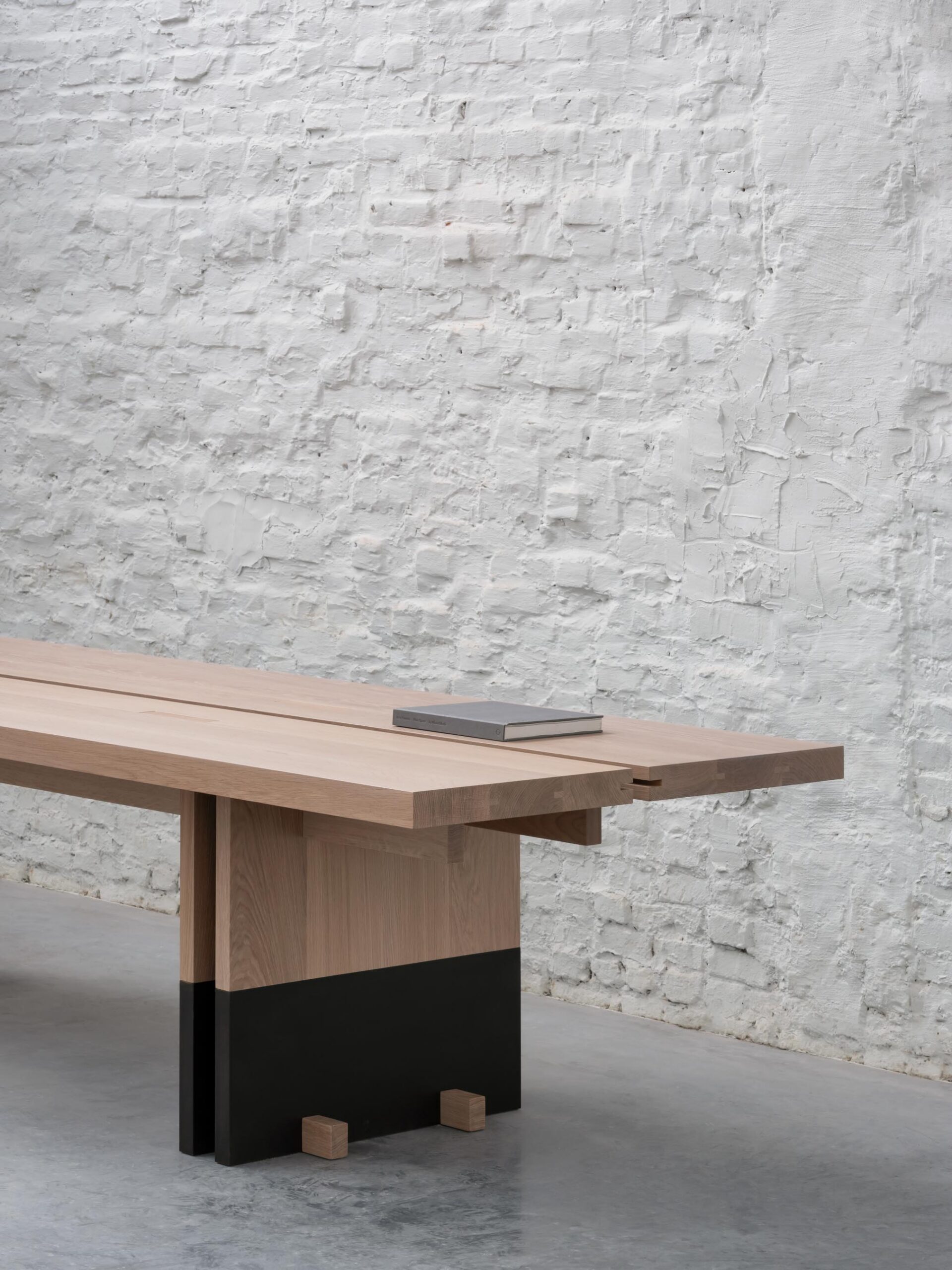
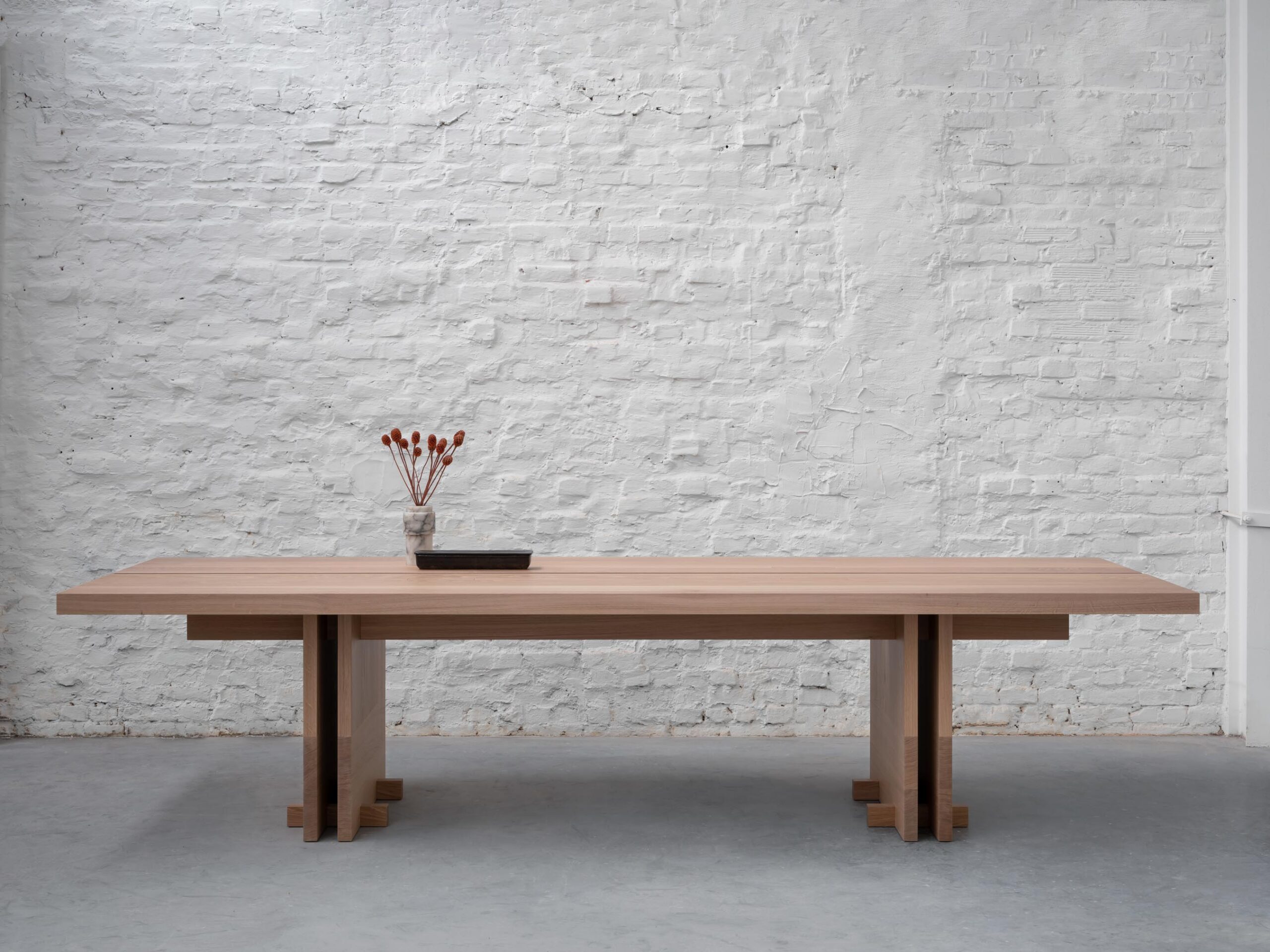
Rift grows from that line. It began with a single design, shaped by a wish for simplicity and for an honest, visible construction. Almost every element was duplicated: surfaces split in two, supports rising in pairs, structural parts set side by side. The halves stand close but never quite touching, like two voices holding the same note. Doubled, the structure becomes both strong and self-supporting, while the opening between each pair runs from surface to ground and lets the light fall in a thin seam across the floor as the day goes on.
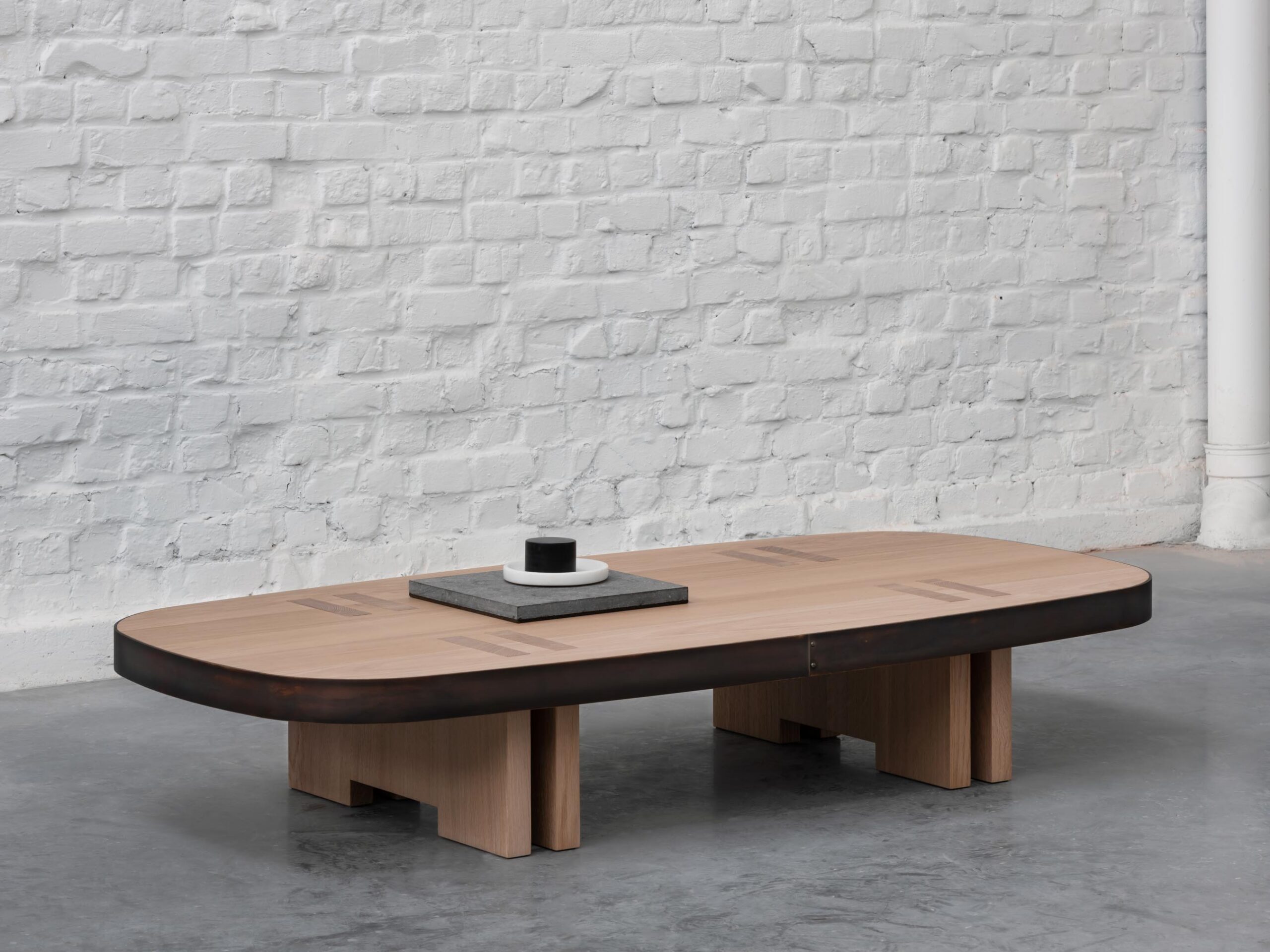
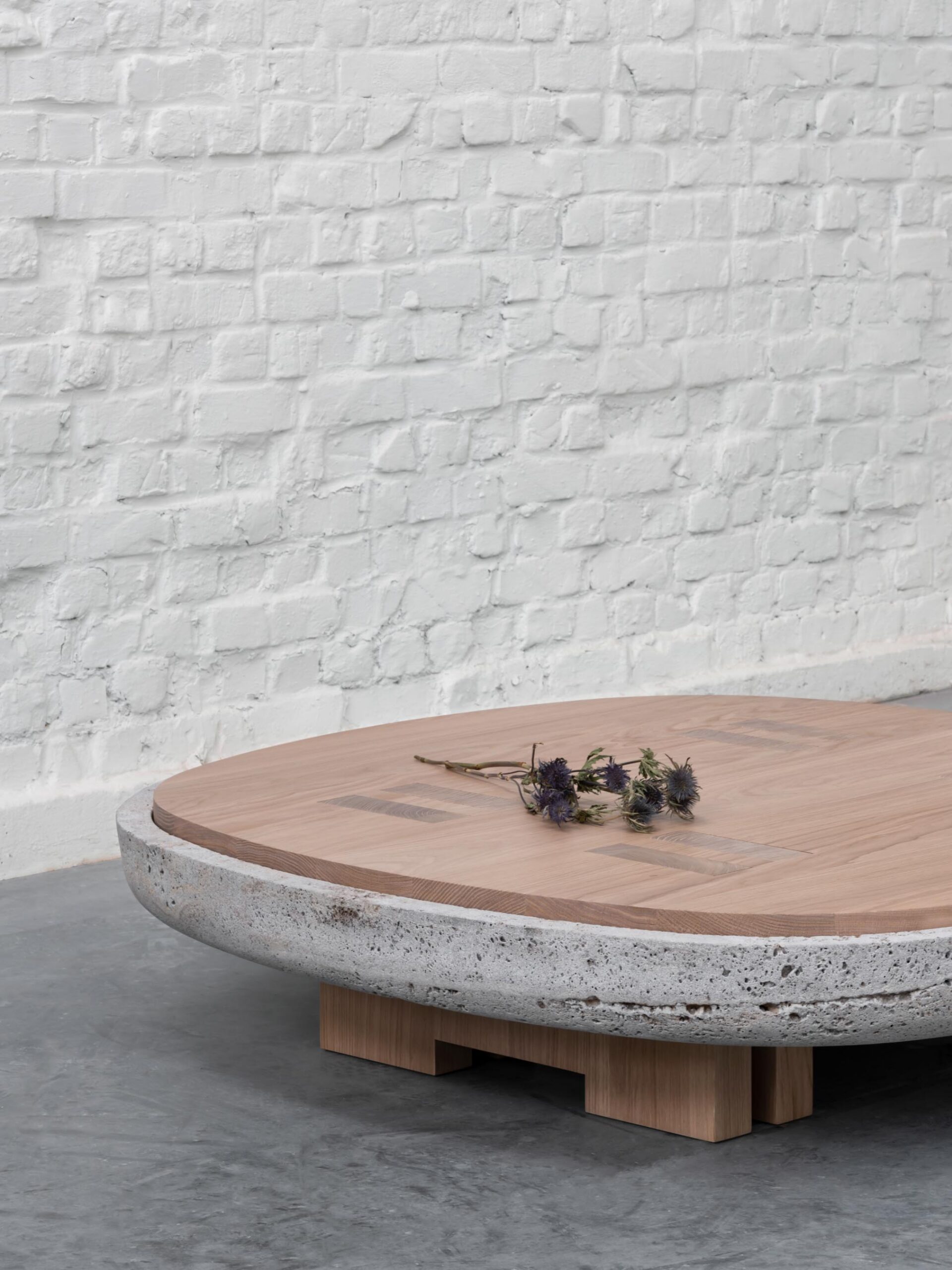
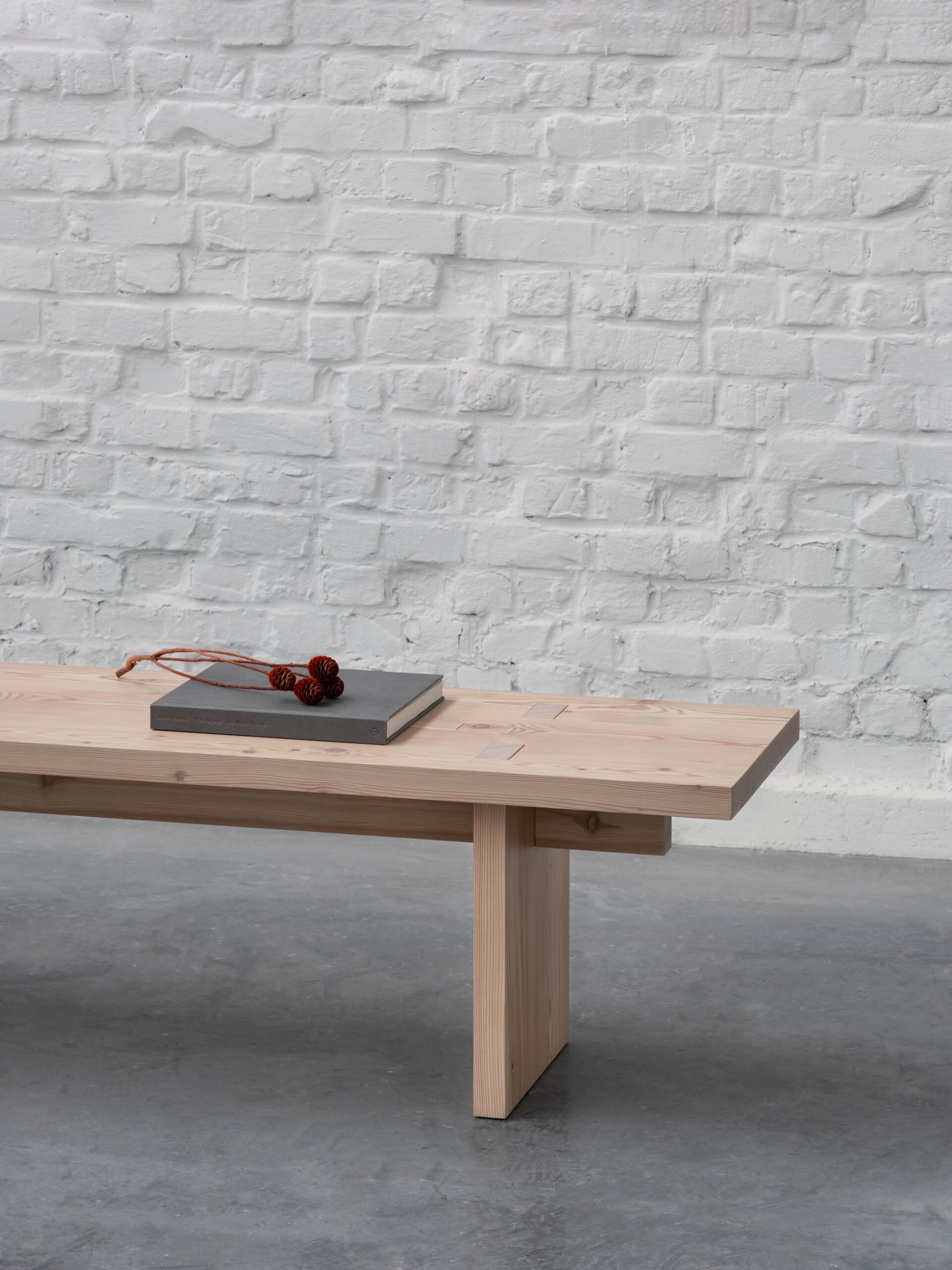
Nothing is hidden in what holds it together. Every part is joined through traditional joinery, left in sight, so the eye can follow how one element carries the next, the way a hand follows the grain. Three noble, natural materials come together here: wood, natural stone and metal. Patinated metal parts introduce a subtle contrast to the warmth of the wood and the porous depth of the stone, each material keeping its own voice.
Every later form returns to that first idea, refined in proportion and detail, varied in material, but always divided, and always complete. Each piece is brought to life by skilled artisans, who carry the same patience into their work as the builders who first inspired it. Joints are cut and fitted by hand, surfaces are shaped and finished until the material can be felt.