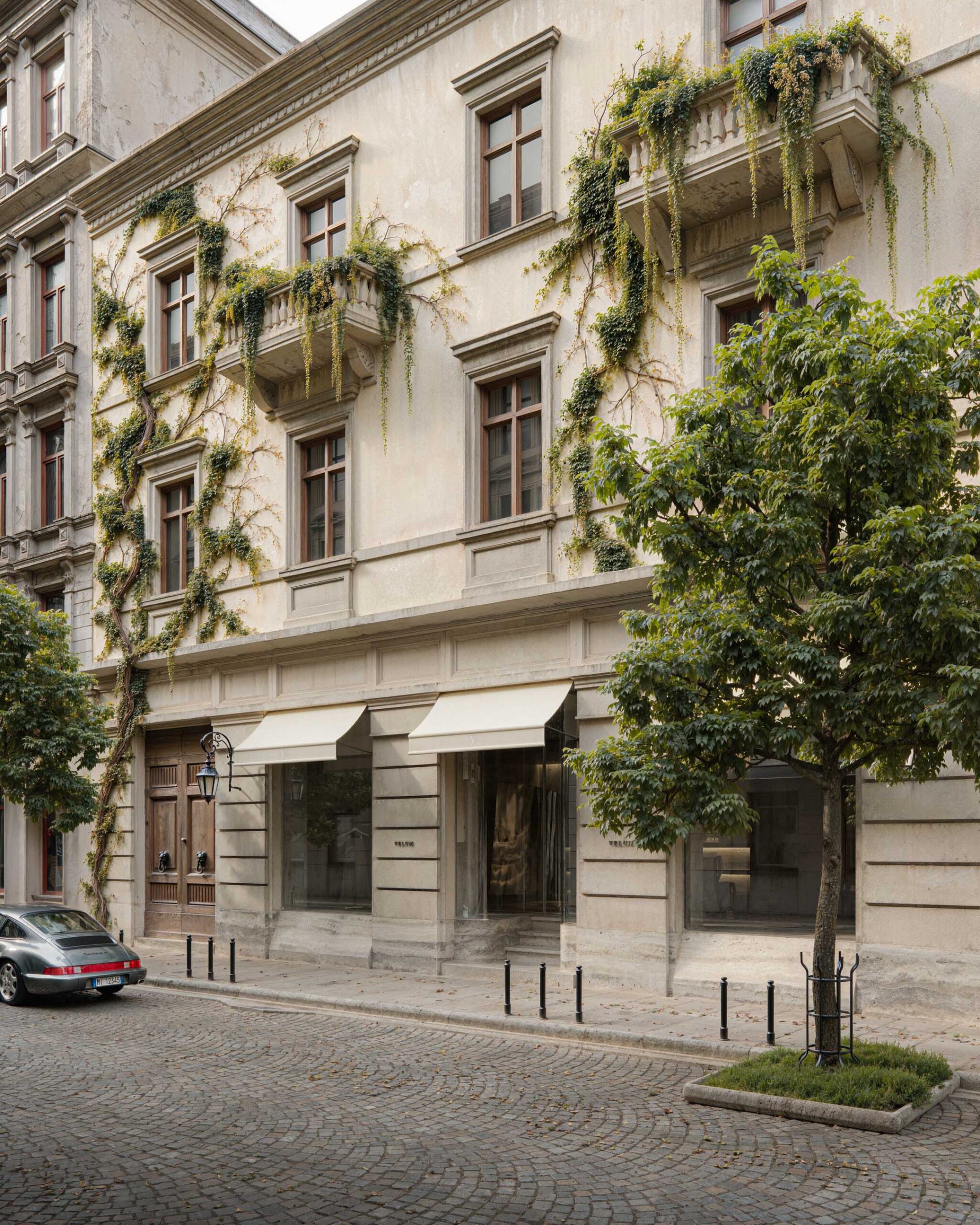
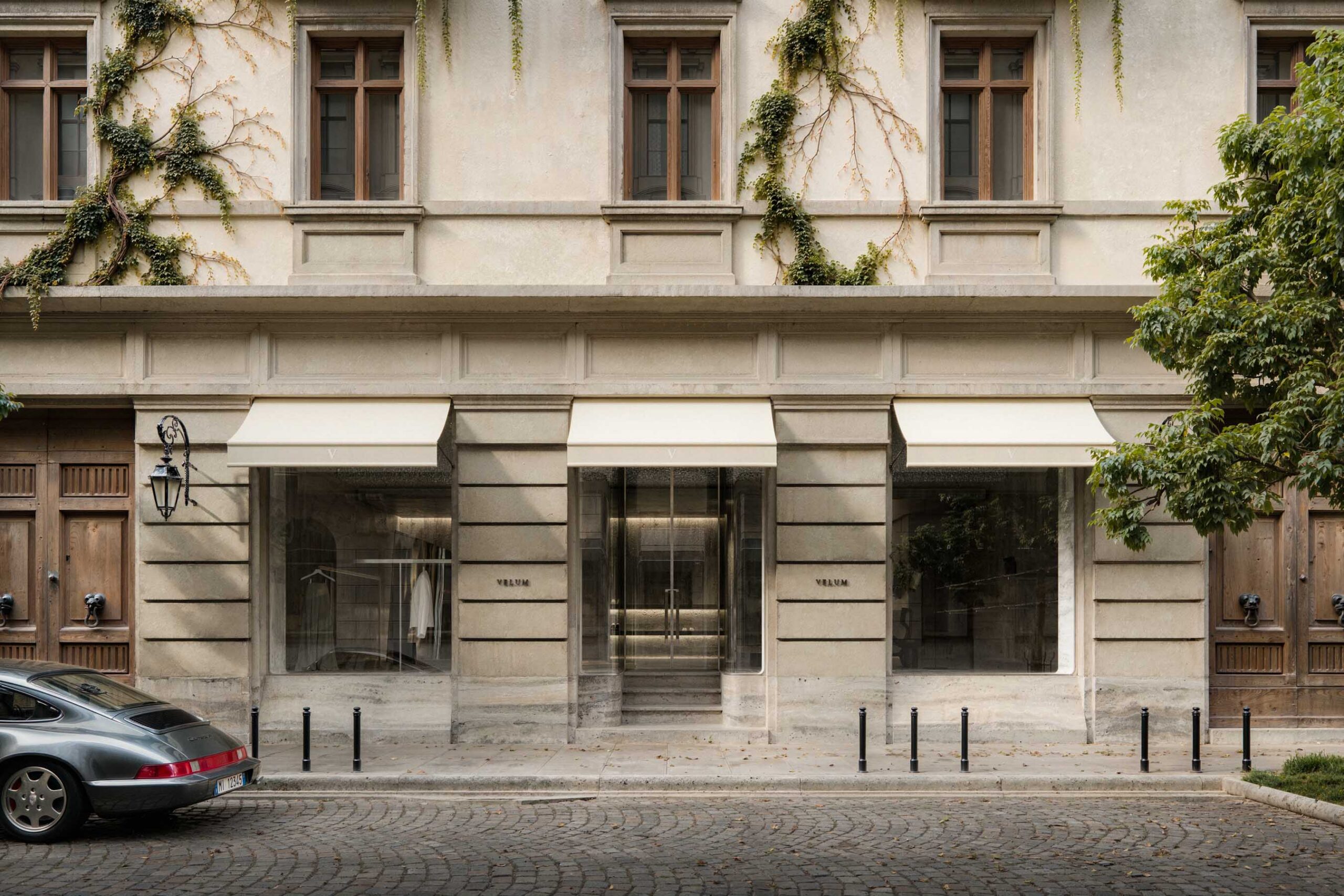
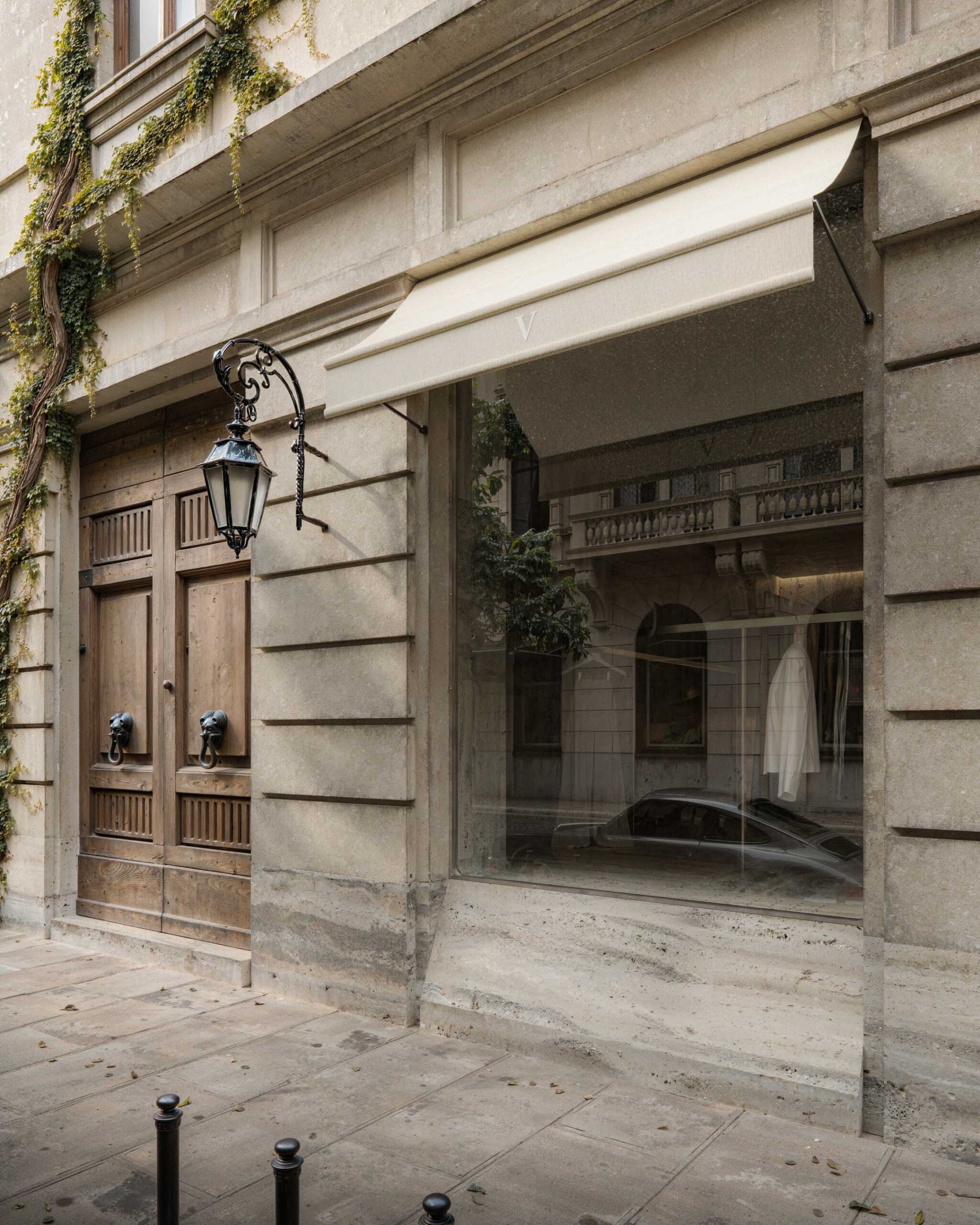
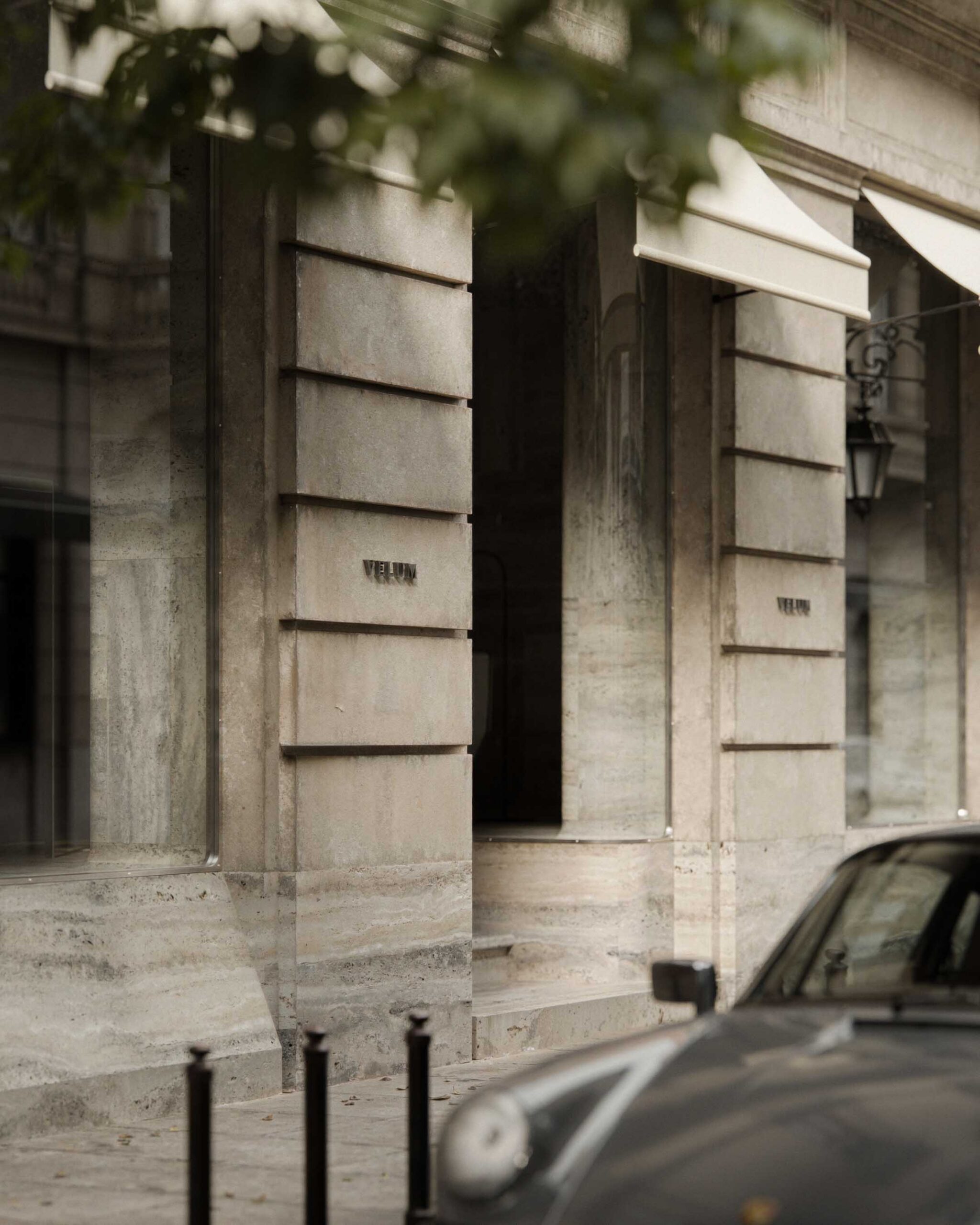
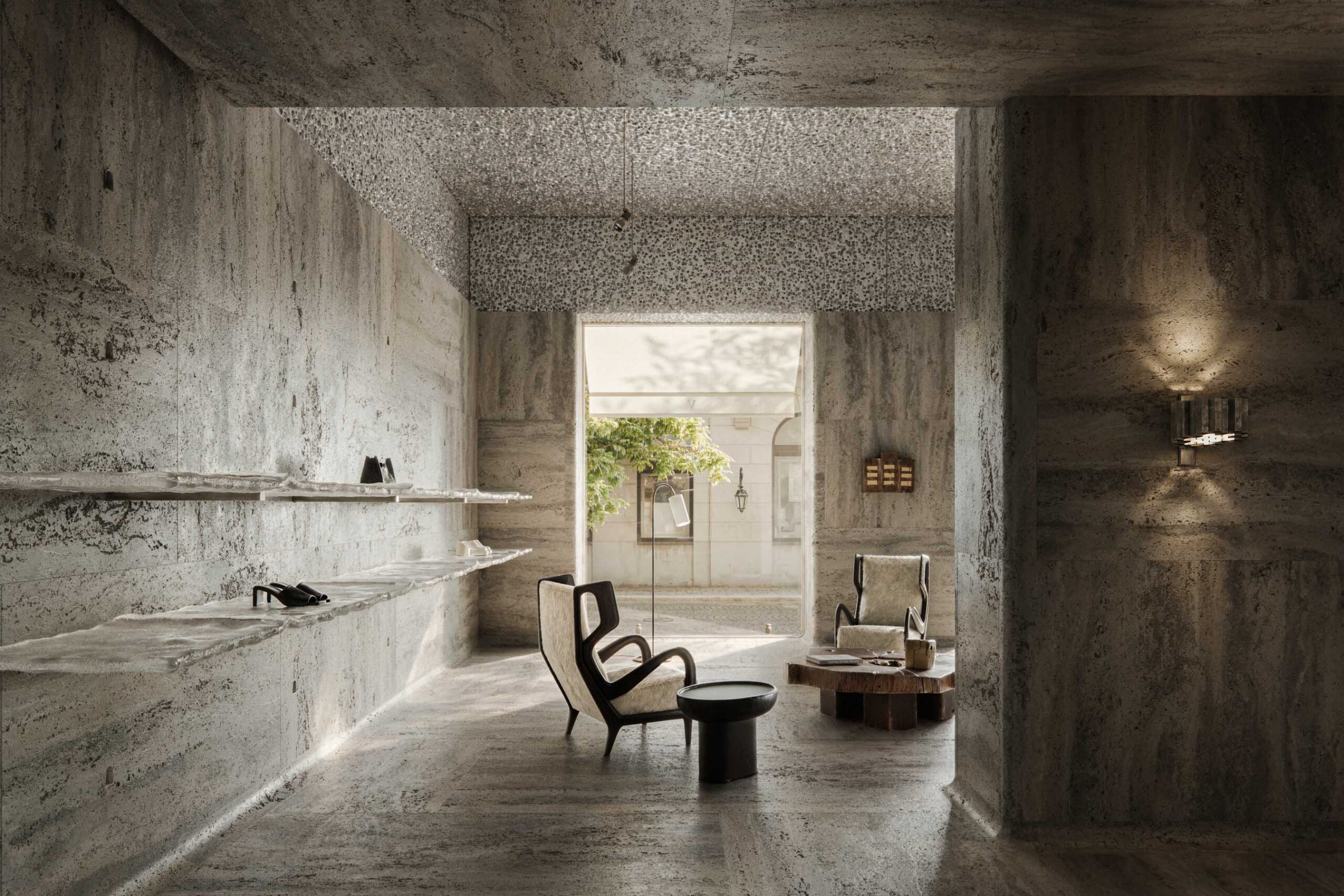
In the center of Milan, where Italian fashion and design have long grown side by side, the ground floor of an early nineteenth-century neoclassical palazzo is reworked into a flagship store for a couture house. Rather than borrowing from fashion literally, the design reinterprets its language: the open structure of woven fibers, the layering of fabric, the shift in direction where two pieces of cloth meet. Translated into stone, metal and glass, these ideas gain architectural weight.
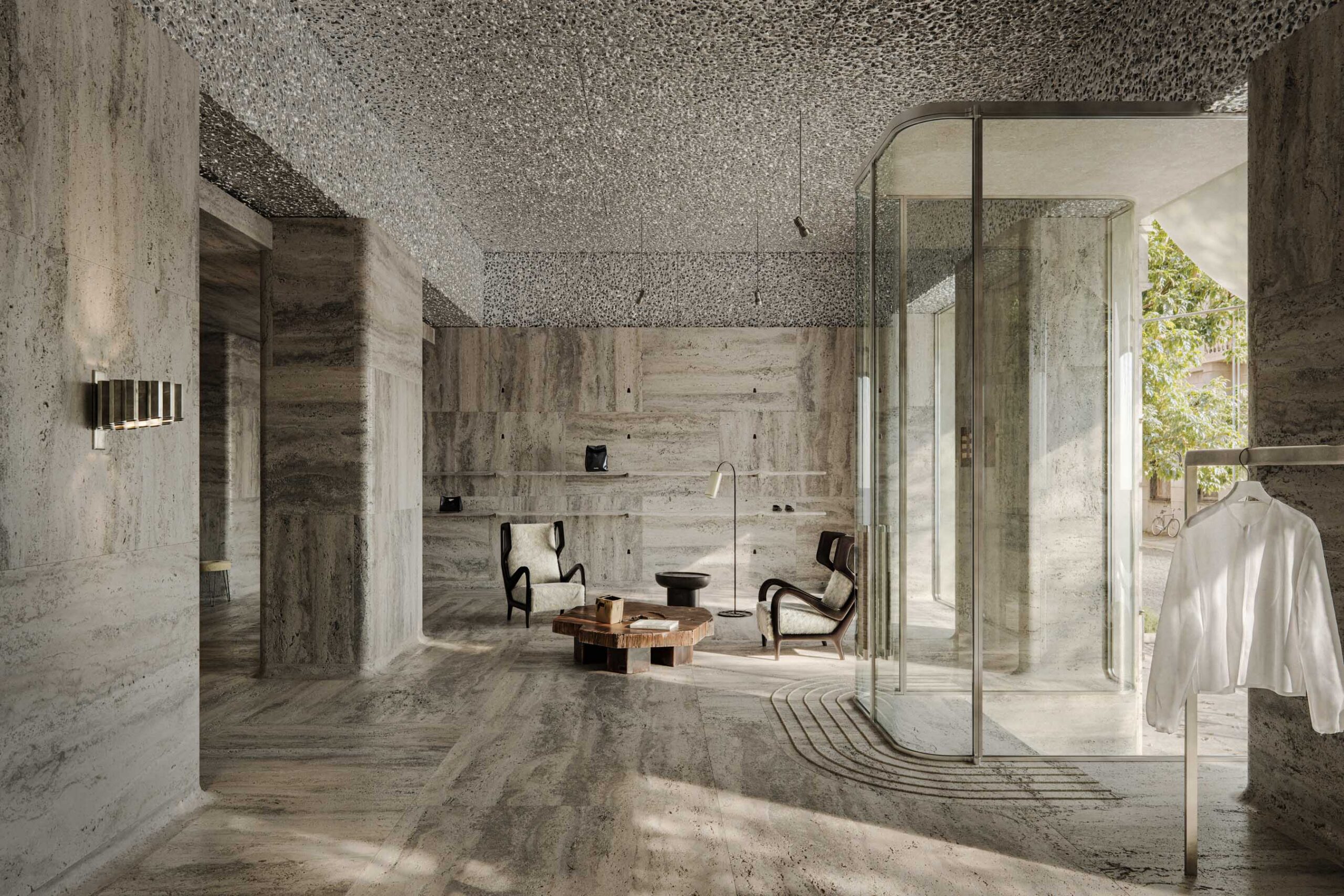
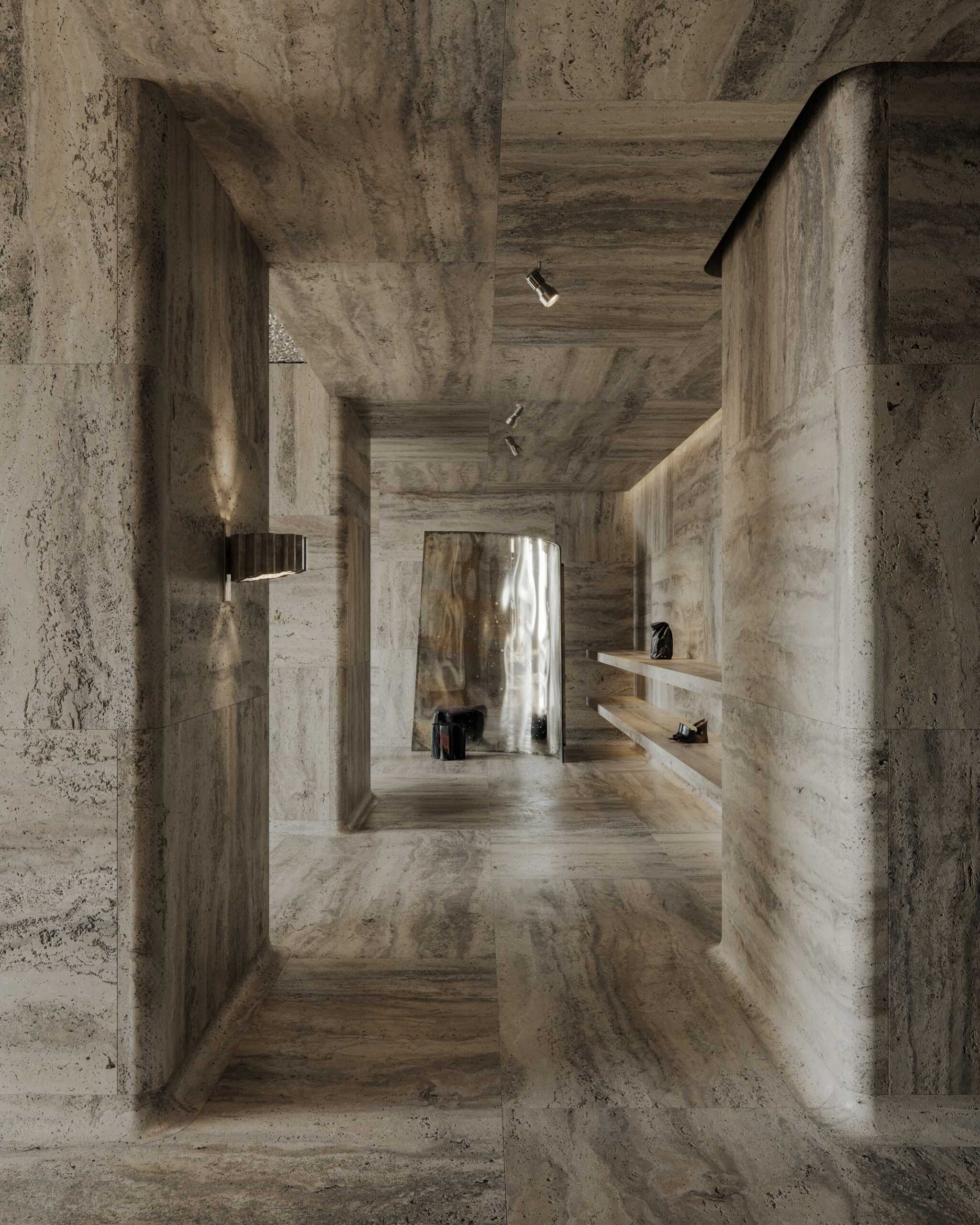
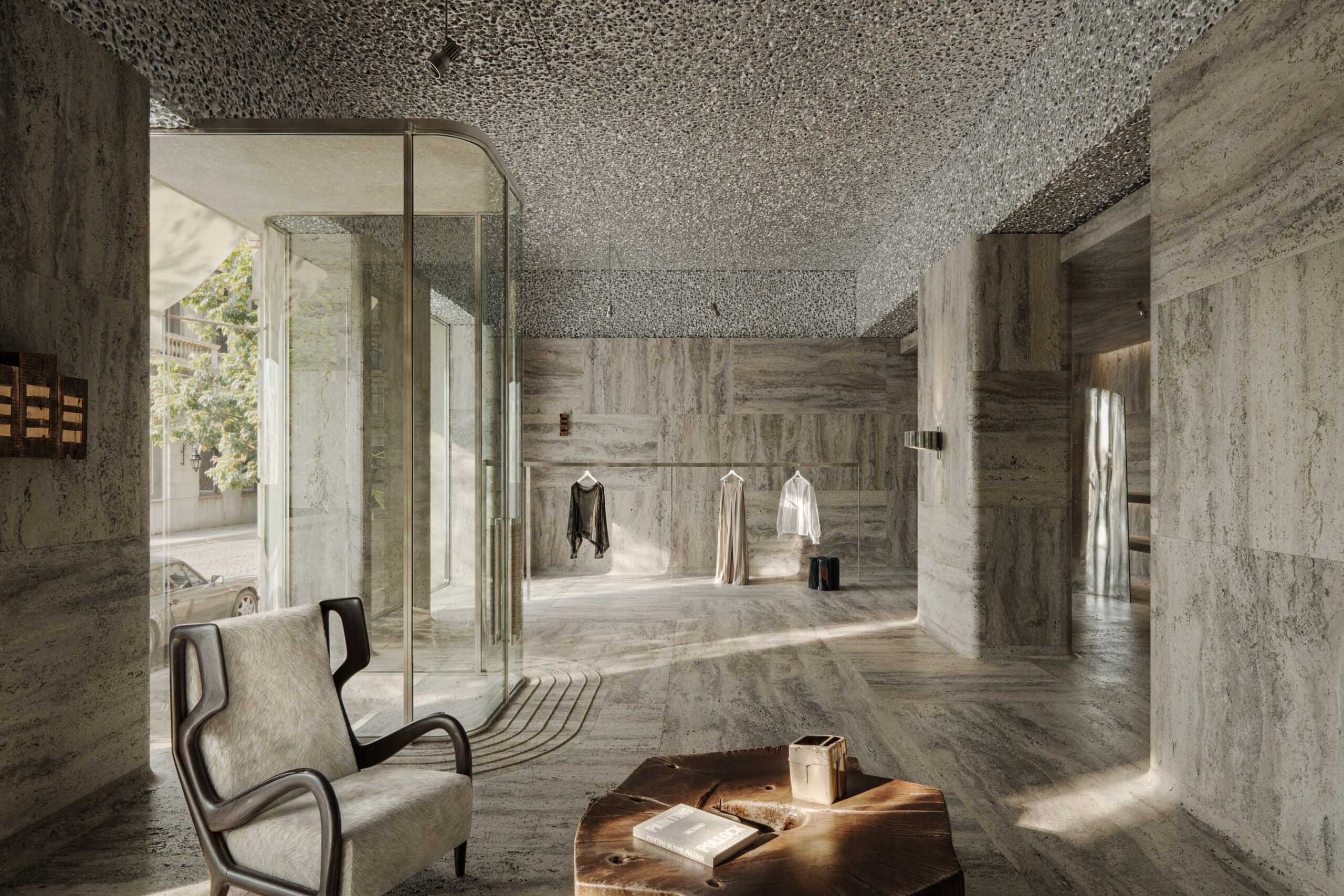
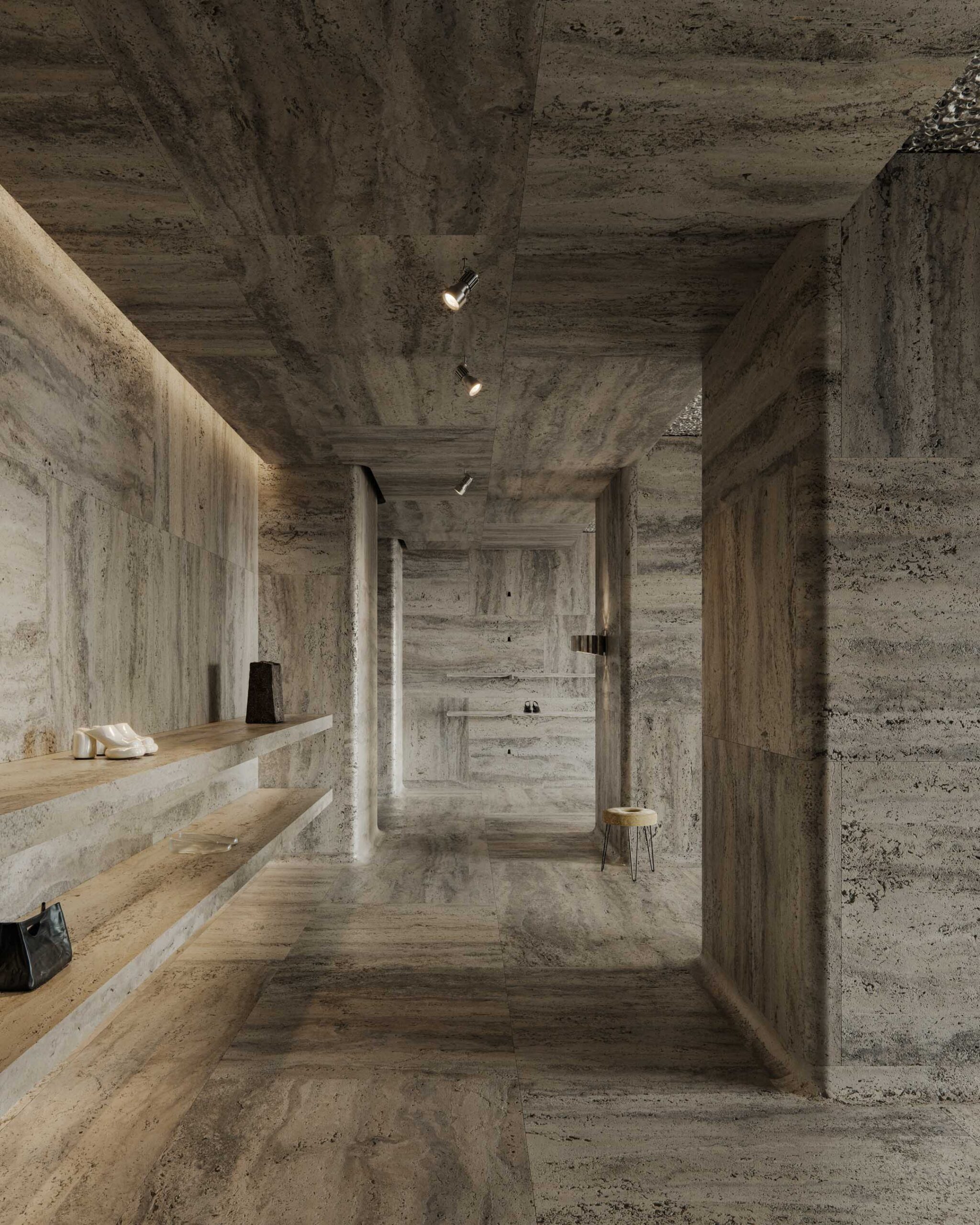
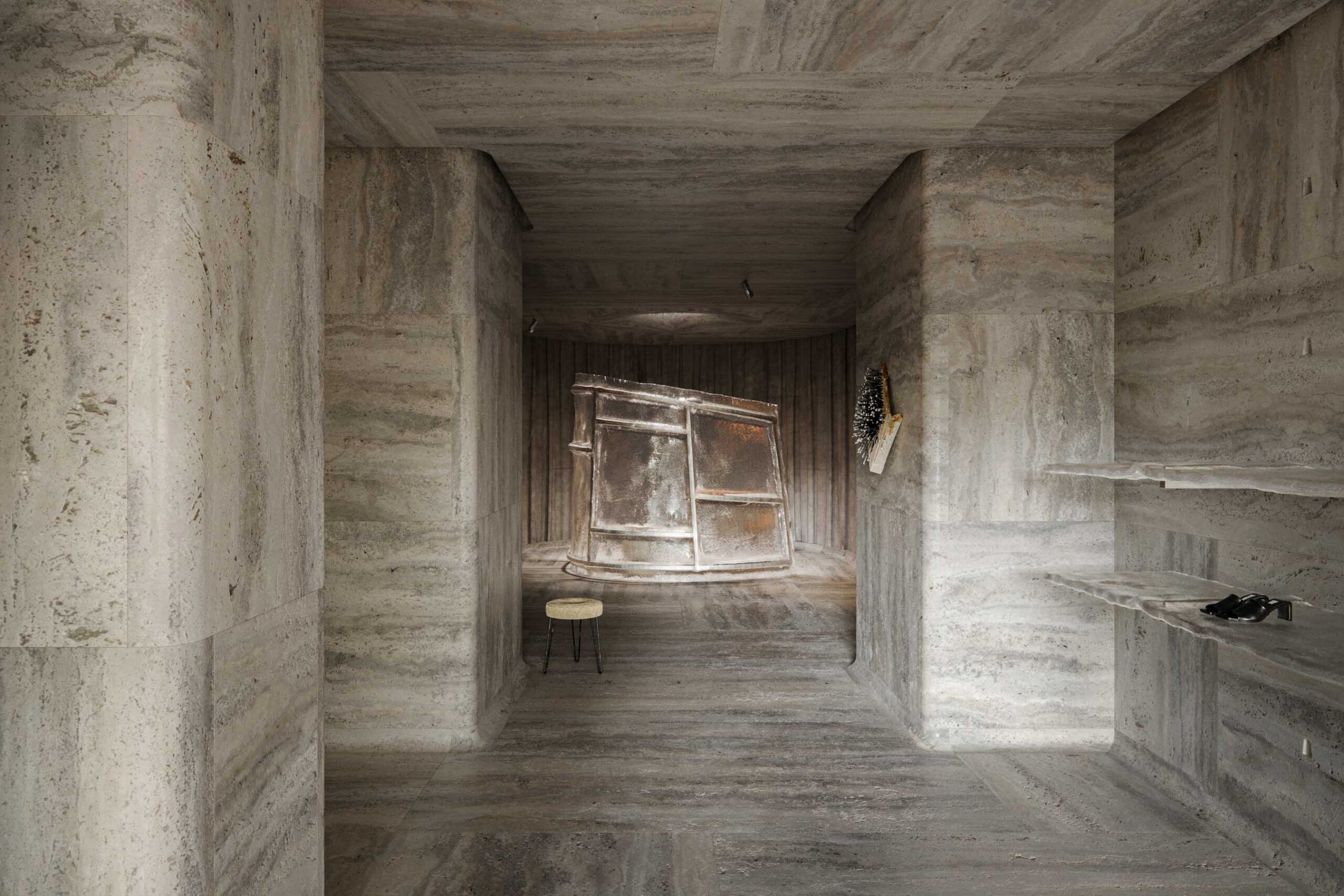
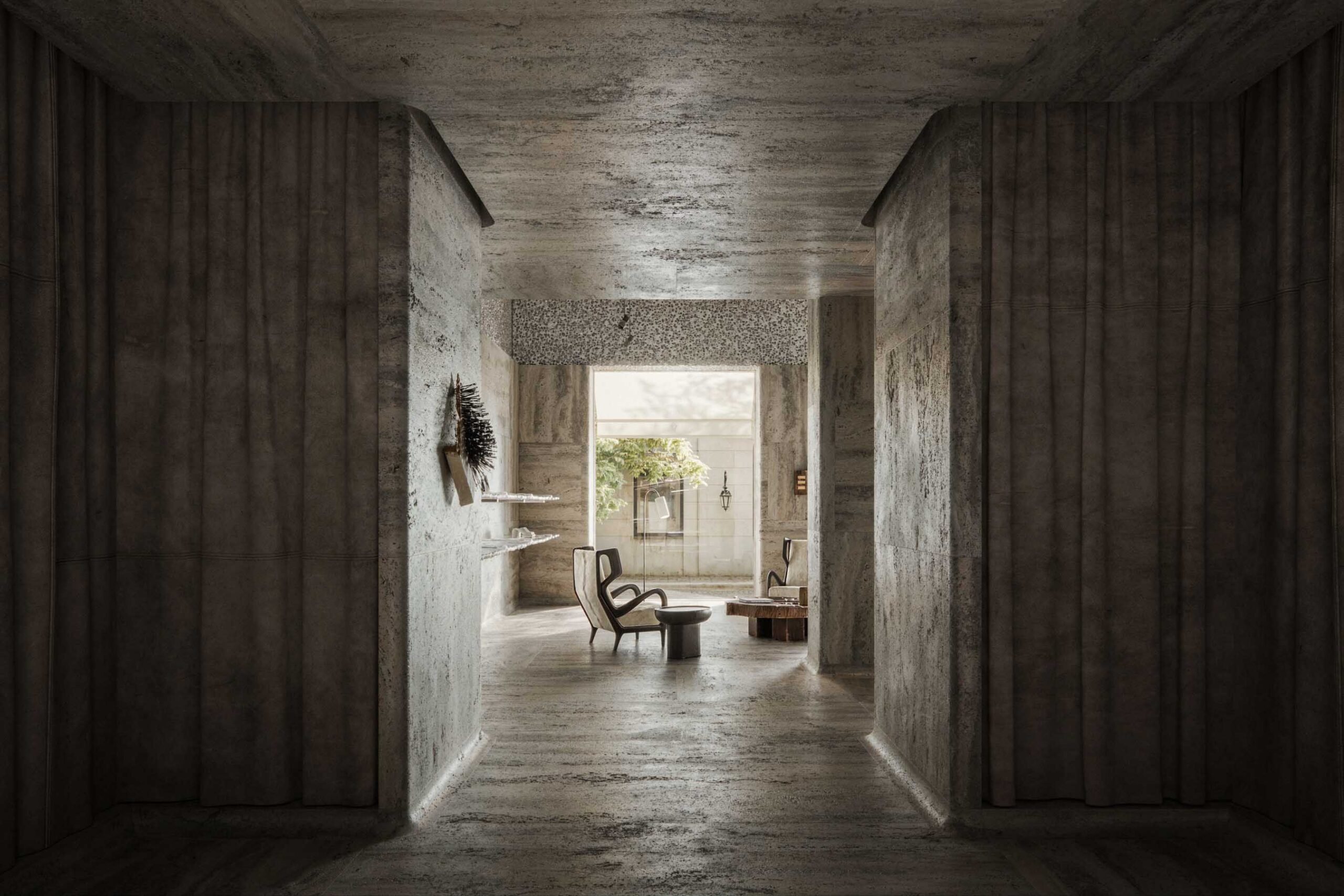
Travertine is known throughout Italy, while in Milan the bases of many buildings are clad in Ceppo di Gré, a gray Lombard stone. Travertino Titanium brings the two together: the color and contrast of Ceppo within the more classical line of travertine. Brushed and aged, it sits quietly within the historic façade. The stone forms a single shell, almost like a pattern in fashion: cut, folded and anchored as a new layer of the interior. It begins as a low block on the pavement, lines the window reveals and folds inside from floor to wall to ceiling. Its thickness shows at every opening, and its corners are softly rounded, like fabric turned over an edge.
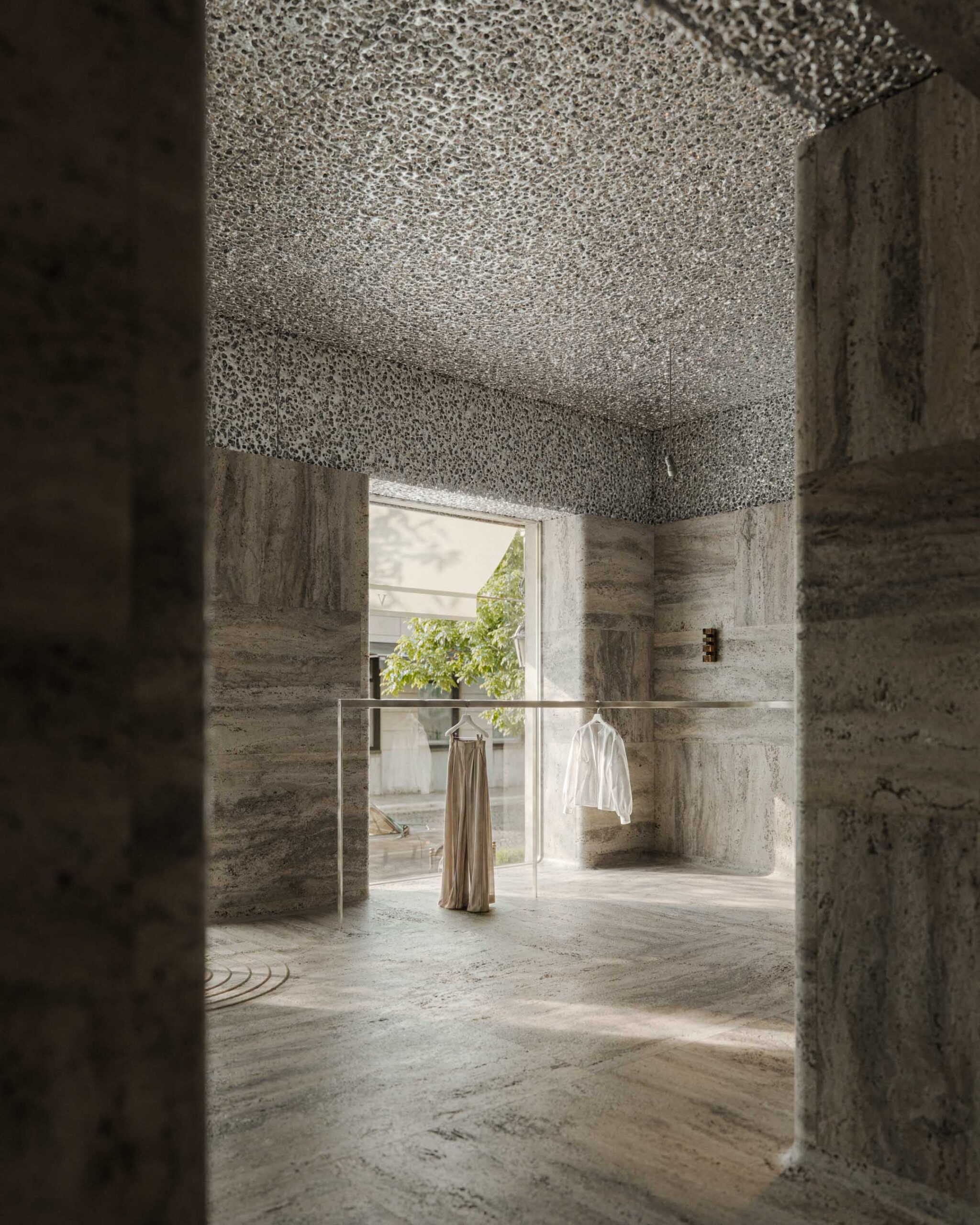
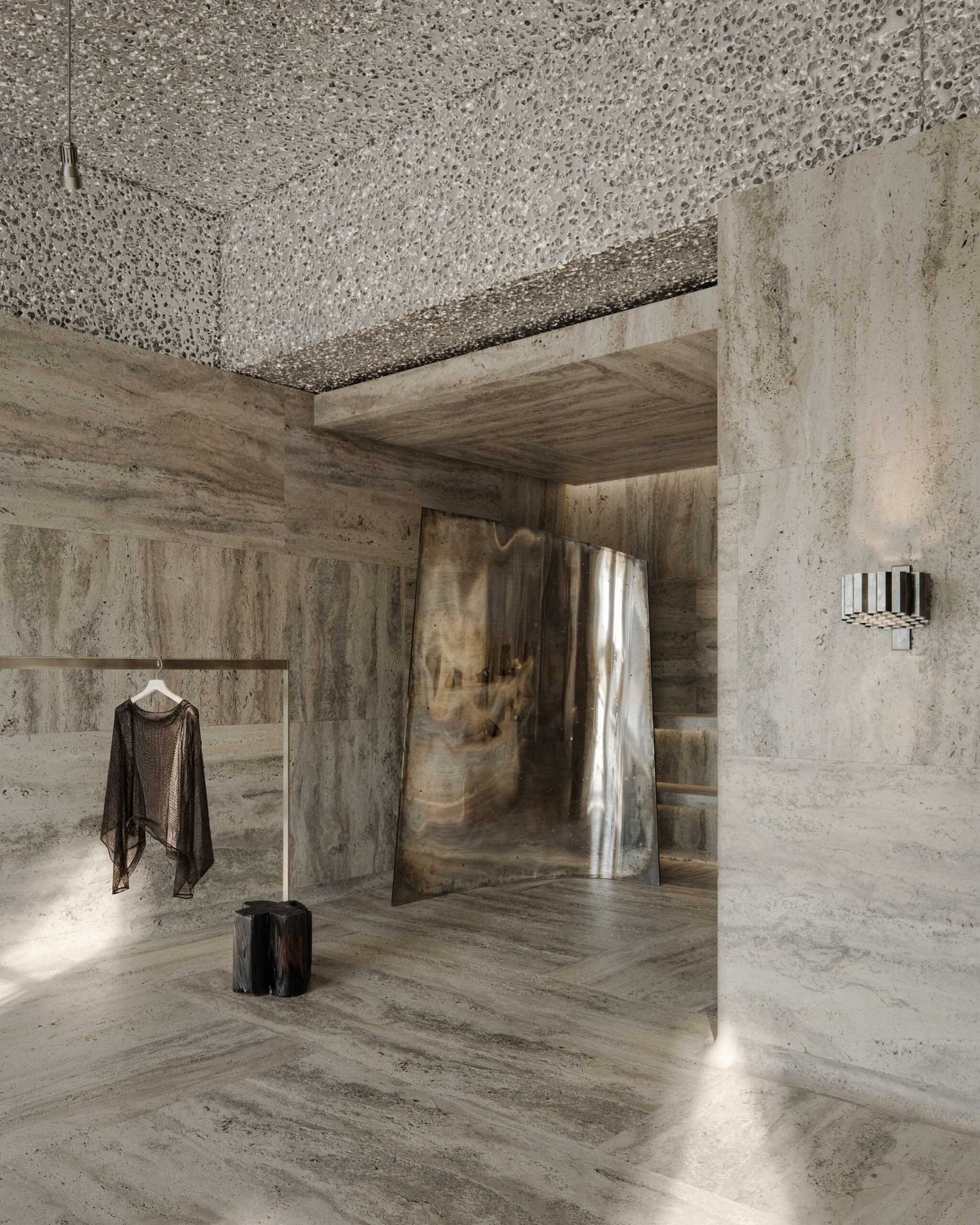
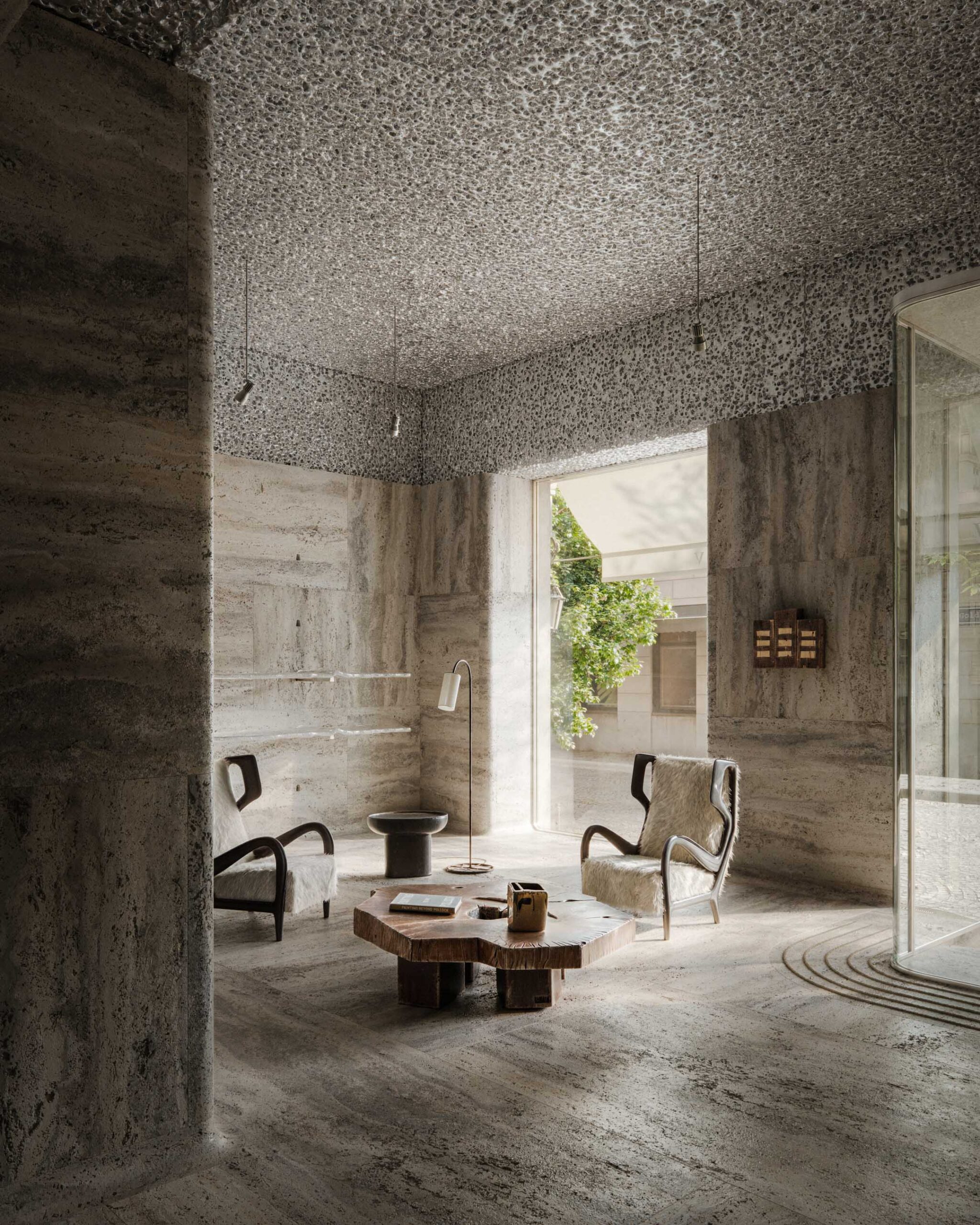
Cut along the vein, the stone reads as layered cloth. Across floors, walls and ceilings, its solid slabs alternate between horizontal and upright, giving the shell the tension of patchwork or a bias cut, while a single stone keeps the whole calm. Above the window heads, it gives way to open-cell aluminum. Its irregular, directionless structure enlarges a loose weave into something hard and glinting, unexpected in the way fashion often is. Glimpsed from the street, it spreads inside like a shimmering canopy.
Slim frames in brushed nickel, their corners rounded, hold the glazing and return in the door pulls and clothing rails. With the soft curves throughout, they recall the city’s post-war interiors. Cast artisan glass, rippled like ice, forms shelves, while further in, deep ledges are cut from the stone itself.
Within this mineral setting, a curated selection of art and vintage, from Richard Nonas to the sculptural timber furniture of Zanine Caldas, brings warmth and movement and gives each room purpose and definition. Warm wood balances the harder materials, while upholstery and leather enter into their own dialogue with the architectural envelope.
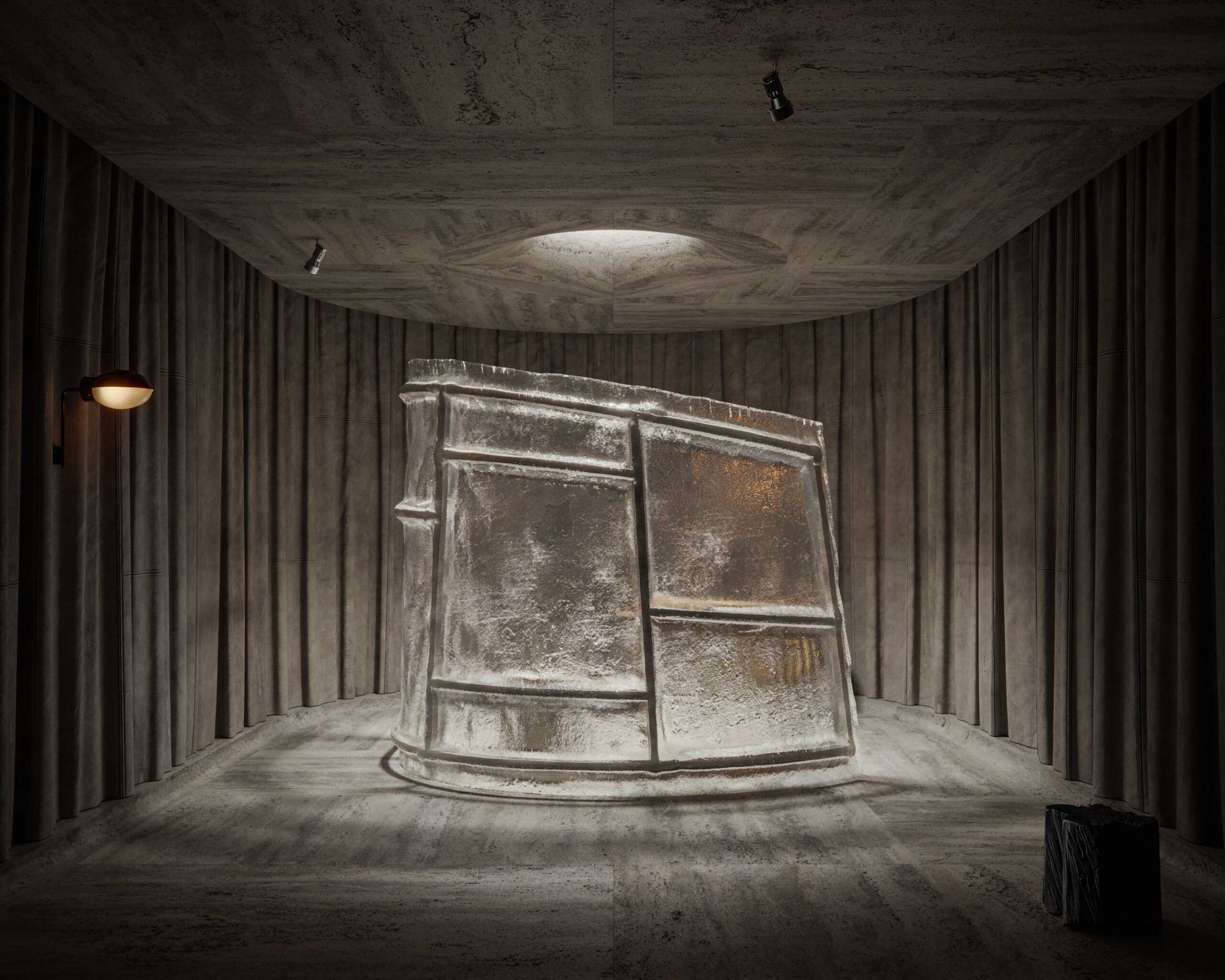
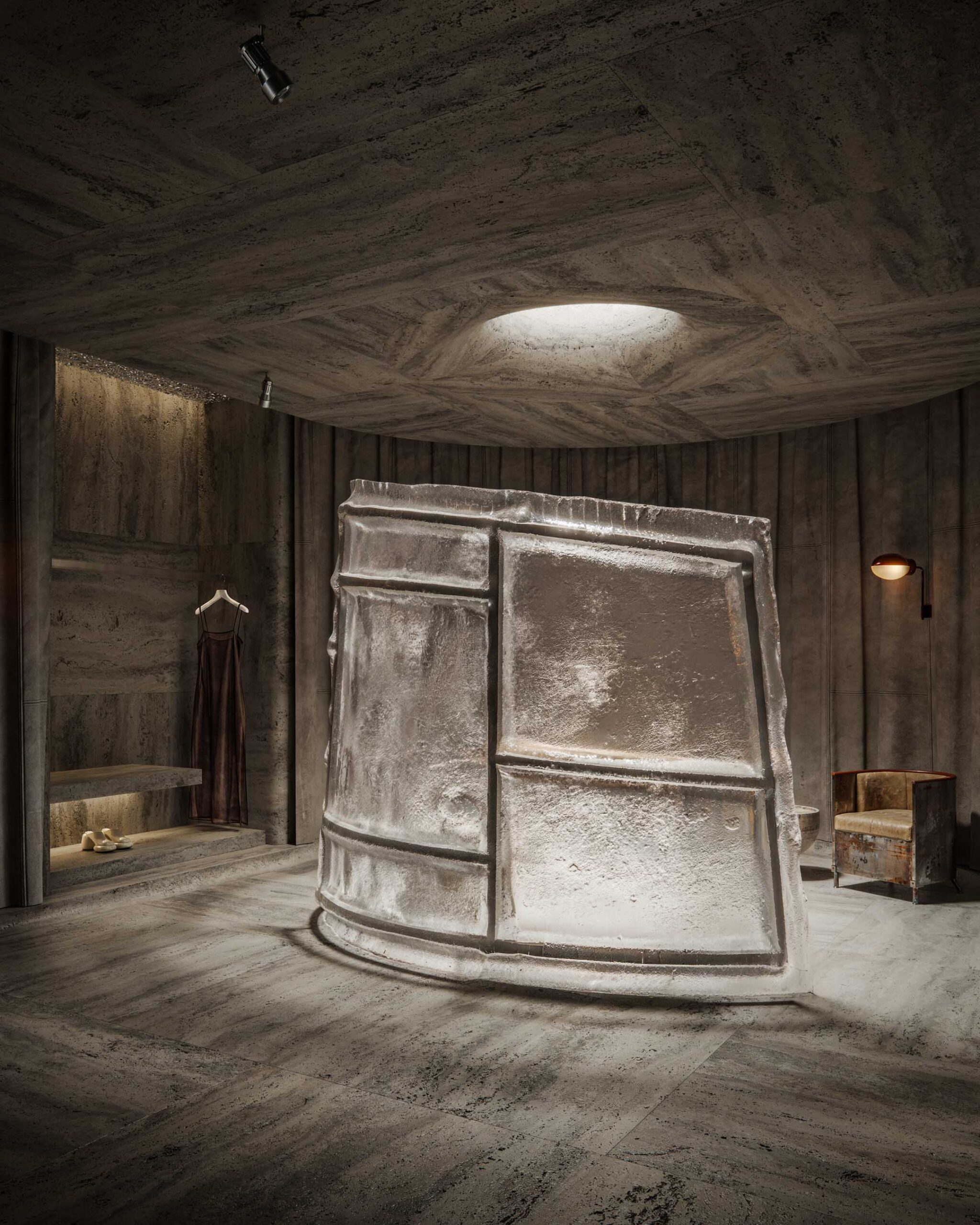
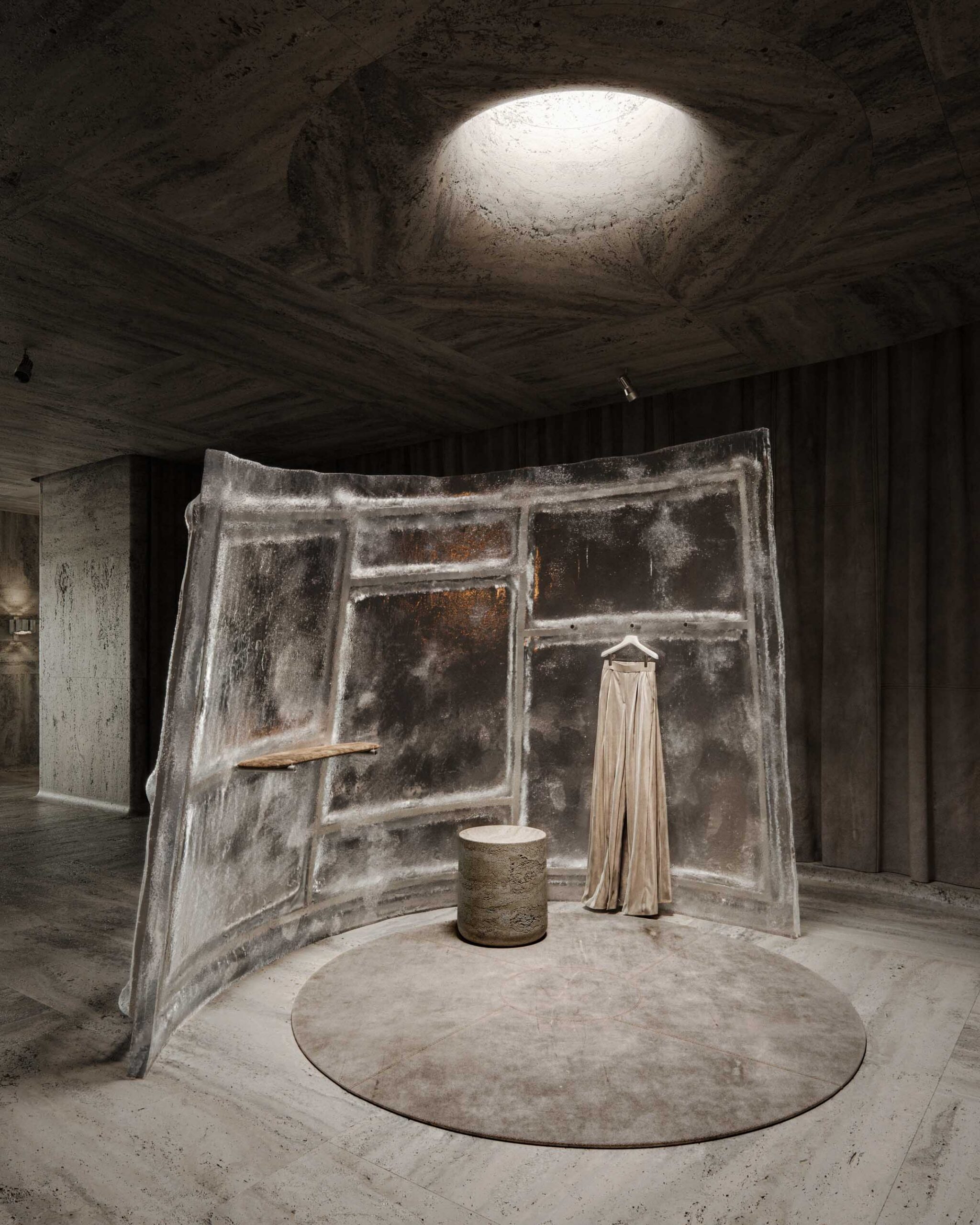
Rooms open into one another, narrowing and darkening away from the street. At the back, the fitting room is reimagined as a small theater beneath a round skylight. Stitched leather curtains line its walls, concealing mirrors, storage and a lit niche for assembling outfits. At its center, a curved screen of cast artisan glass, ribbed with metal, closes into a drum, and the light from above leaves the figure behind softly veiled.
In the front salon, the amorphous outline of the glass returns in a more minimal form: a sheet of polished steel riveted to a rudimentary frame of box sections. Both pieces leave their construction exposed, like a raw edge or visible seam on the runway. That roughness contrasts with the exacting finish elsewhere, yet also sharpens it, making the craft more legible.
Images by Spectrum.